
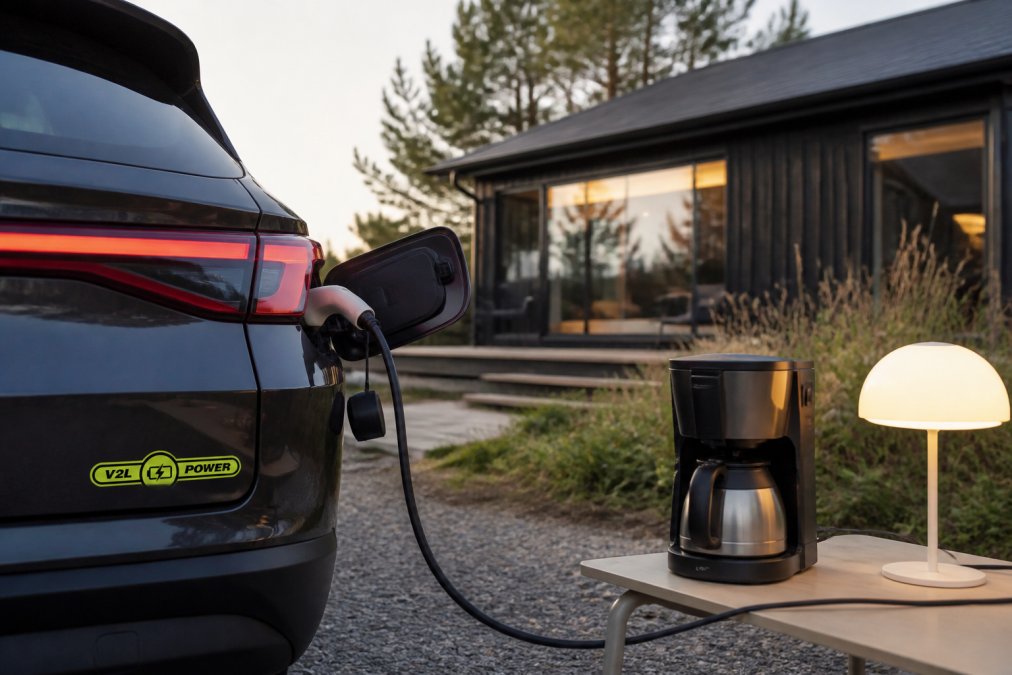
How your electric car supplies your summer home with electricity
Table of contents
- What you need to know before you start
- V2L adapter for electric cars: how it works
- Which electric cars have V2L function?
- Step-by-step: how to power your summer house from your car
- Emergency power from electric cars: safety and practical considerations
- V2L vs V2H: what's the difference?
- Common mistakes to avoid
- Conclusion
Last updated: August 19, 2026
What you need to know before you start
Can your electric car actually power your summer home? Yes, if you have the right equipment and your car supports V2L technology. But it's not as simple as plugging a wire into a socket. There are safety requirements, compatibility issues and practical limitations you need to understand first.
V2LPower specializes in exactly this solution, how to use electric car summer house power safely and efficiently. Before you get started, you need to know three things: which car you have, how much power you need, and which V2L solution suits your needs.
Check your car's manual or manufacturer's website to confirm V2L support. Not all electric cars have this feature, and some require software updates to enable it.
Most people think V2L means charging the car. It doesn't. V2L means Vehicle-to-Load, power flows from the car to external devices. It is a crucial difference for security and system design.
V2L adapter for electric cars: how it works
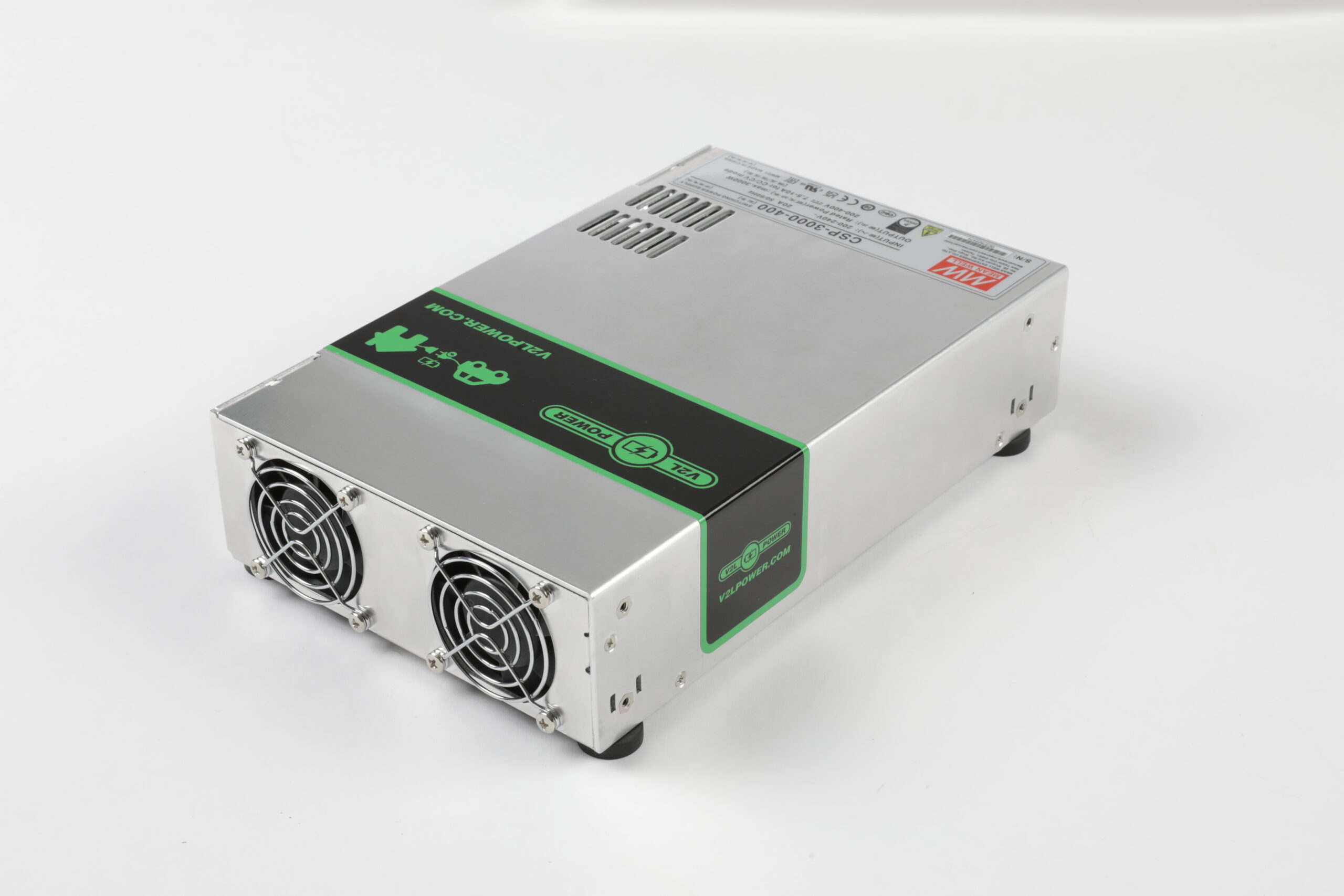
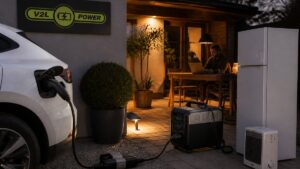
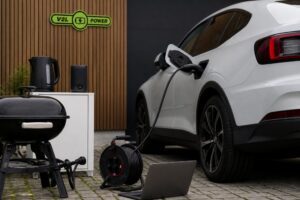
A V2L adapter is a device that allows power to flow from your electric vehicle's battery through the Type 2 charging port to external electrical devices. The adapter acts as an intelligent intermediary that regulates voltage, current, and safety features.
Here's what happens internally: The car supplies the adapter with direct current (DC) from the battery. The adapter converts this current to alternating current (AC) of 230 volts, which is used by European household appliances. At the same time, the adapter monitors the temperature, load and any errors; if something goes wrong, it automatically cuts off the power to protect both the car and your equipment.
This process happens through the Type 2 port, which is used for both charging and V2L. This means that when using V2L, you cannot charge the car at the same time.
The V2L adapter is not just a physical connection, it is an electronic device with safety features that must be certified and compatible with your specific car model.
How it differs from regular charging: During normal charging, current flows in in the car. At V2L, current flows out from the car. The systems use the same port but completely different electronic processes. Your car must have V2L software installed to allow this functionality.
Typical setup:
- V2L adapter or external converter
- Type 2 charging cable or dedicated V2L cable
- Socket or fixed installation for the summer house
- Protective equipment (residual current circuit breaker)
Which electric cars have V2L function?
Not all electric cars have V2L functionality. The manufacturer must have designed the battery system and software to support it. Here are car brands and models that typically offer V2L:
Hyundai and Kia: Ioniq 5, Ioniq 6, EV6, EV9 and newer models. These are among the first mass-produced cars with V2L as standard.
Volkswagen: ID.Buzz and some newer ID models are starting to offer V2L support, but it varies by market region.
BMW: Some newer iX models offer V2L through third-party solutions.
Mercedes: EQE and EQS models investigate V2L integration.
Nissan: Leaf Plus models have V2L capability in certain markets.
Generally: If your car is from before 2021, it is unlikely to have V2L. If it is from 2022 or later, should you check the vehicle specifications or contact the dealer directly.
Software updates can enable V2L on cars that didn't have it at the time of purchase. Contact your car manufacturer to see if your model can be updated.
How to check your car:
- Look in your car's infotainment system under "Settings" or "Energy Management""
- Contact your car dealer with the chassis number
- Check out V2LPower's compatibility list, we test and document every car model
Step-by-step: how to power your summer house from your car
Step 1: Check compatibility and power capacity
Start here. If your car doesn't support V2L, or if your summer house can't handle the power, knowing now will save you time.
Check car compatibility:
- Refer to the car's manual or manufacturer's website
- Call your car dealer with the chassis number
- Test the V2L feature by parking the car and seeing if the system offers V2L in the menu
Assess the summer house's power needs:
How much power do you need? It depends on what you want to power. A typical V2L adapter delivers 3.6 kW (16 amps at 230 volts), which is enough for:
- Small kitchen appliances
- Dishwasher
- Electric heating (small unit)
- Lighting and electronics
It is not enough for:
- Whole house electric heating
- Air conditioning
- Large industrial machinery
- Simultaneous operation of multiple high-power consumers
Check the car's battery capacity:
A typical electric car with a 50-60 kWh battery can theoretically deliver 10-15 hours at 3.6 kW without being completely discharged. In practice, you keep 20-30% in reserve to protect the battery.
Step 2: Choose the right V2L solution
You have three main choices:
Built-in V2L port (if the car has it):
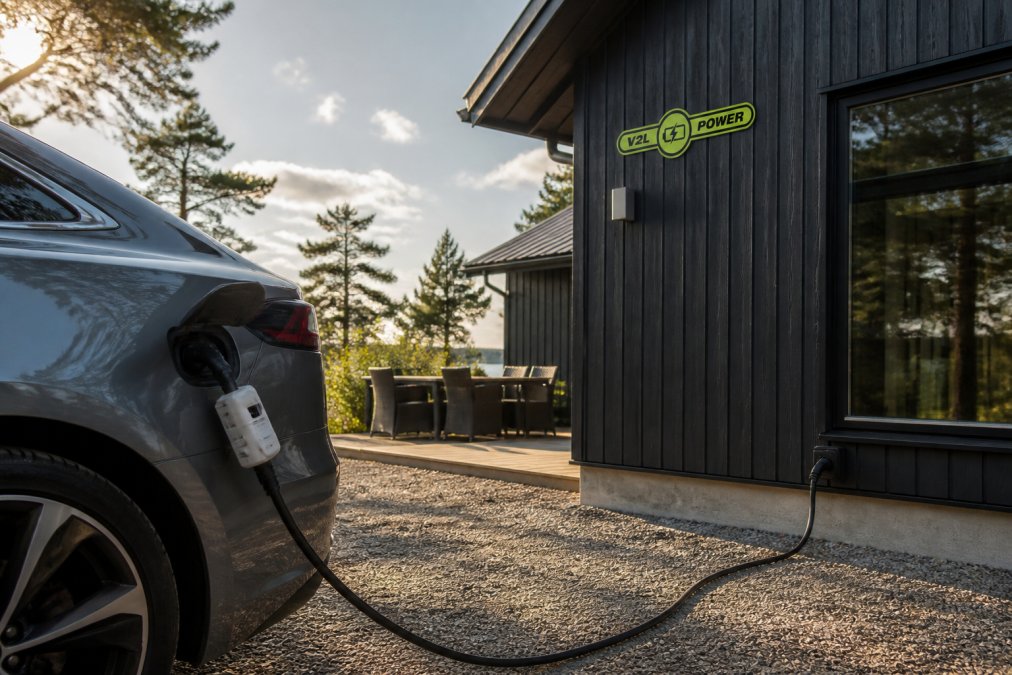
Some cars have a dedicated V2L port on the side. You simply connect a V2L cable directly to this port and to a power outlet or hardwired installation. This is the simplest and safest system.
External V2L converter:
Connect an external inverter to the Type 2 charging port. The inverter converts power from the battery to 230 volts AC. V2LPower offers certified inverters designed to Danish electrical standards and safety. The advantage is flexibility, you can use the same inverter for different cars.
Type 2 charging converter:
A compact solution that sits directly on the Type 2 charging port. Less powerful than external inverters (typically 2-3 kW), but good for smaller summer homes or camping.
For summer homes with 1-phase electrical installation and moderate power requirements (under 3.6 kW continuous), the V2L adapter or external inverter from V2LPower is the right choice. For larger summer homes with 3-phase power or high loads, consider V2H (Vehicle-to-Home), which is a fixed installation.
What V2LPower offers: We specialize in certified V2L converters that have been tested with specific car brands and models. Our solutions include safety features such as automatic overload cut-off, temperature monitoring and fault detection. We also supply dedicated cables and accessories designed to Danish safety standards.
Step 3: Connect the V2L adapter securely
Now comes the critical part. A poor connection or incorrect setup can damage both your car and your equipment.
Physical connection:
- Park the car close to the summer house, where the cable can reach without being under tension or stress.
- Open the Type 2 charging port on the car
- Connect the V2L adapter to the port, it should click into place
- Connect the power cord from the adapter to a vacation home appliance or a secured electrical outlet.
- Activate V2L in the car's menu
- Never use a regular extension cord without protection, it is not designed for V2L
- Install a residual current device (RCD) between the adapter and the holiday home equipment.
- Check that the outlet can handle the load (at least 16 amps nominal)
- Never leave the cable in water or damp areas.
- Avoid throwing or bending the cable violently.
Typical connection sequence:
- Connect adapter to car
- Connect outlet or cord to adapter
- Turn on V2L in the car's menu
- Verify that the system confirms V2L operation
- Turn on the device you want to operate.
Step 4: Test the power supply
Before using it for critical equipment, test the system.
First test (without load):
Connect the adapter and confirm that the car's system detects V2L operation. You should see a confirmation in the car's infotainment system.
Second test (light load):
Plug in a simple device like a lamp or charger. Check that it is receiving power and that there are no unusual noises or heat from the adapter.
Third test (normal load):
Plug in the device you plan to use regularly. Monitor the adapter and cable for 10-15 minutes. They should not become abnormally hot.
What to look for:
- Green LED on the adapter (normal operation)
- Stable voltage at the socket (230 volts ±10%)
- No burnt smell or smoke
- The car's system shows V2L active
If anything seems wrong, immediately disable V2L and check the connections.
Emergency power from electric cars: safety and practical considerations
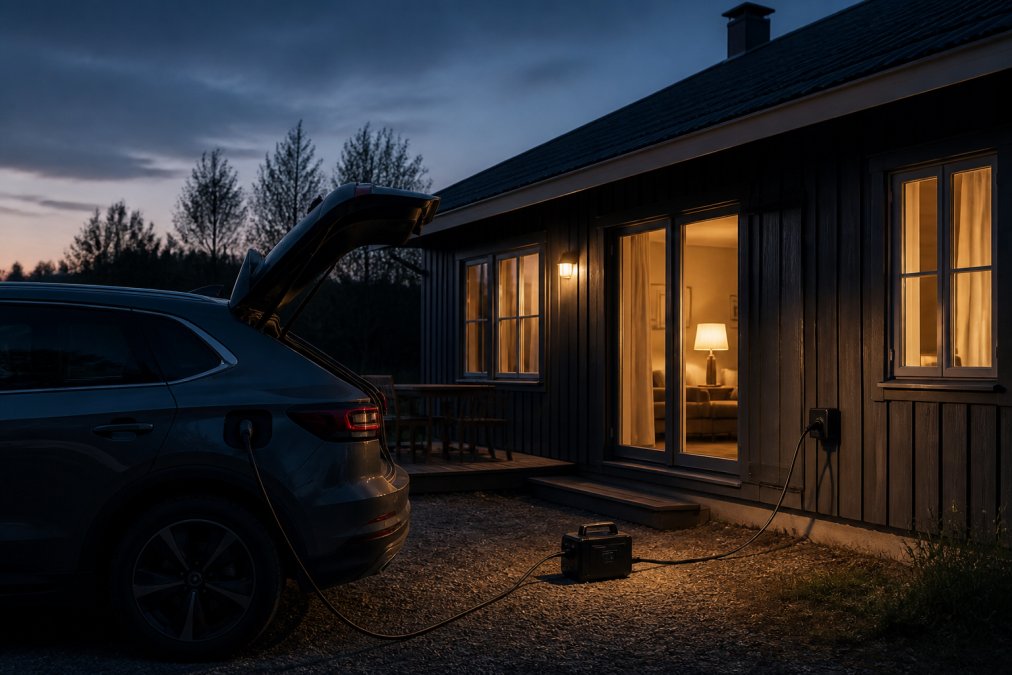
Emergency power from electric vehicles is one of the most practical applications of V2L technology. But it requires preparation and understanding of the limitations.
When to use it:
- Shorter power outages (less than 4-6 hours)
- Backup for critical equipment (refrigerator, freezer, heating)
- Camping or outdoor activities
- On-site craft work without a stable power source
What you need to prepare in advance:
- Make sure your car is fully charged before the summer season
- Install a residual current device between the V2L system and holiday home equipment
- Test the system at least once before you need it
- Know the car's current battery level, you can't see it from the cottage
- Plan for the car to recharge after use (if the cottage does not have charging equipment)
Practical limitations:
A typical electric car with a 50 kWh battery can theoretically provide about 14 hours of continuous power at 3.6 kW. In reality:
- You should not divert more than 80% from the battery (to maintain the functionality of the car)
- Cold weather reduces battery capacity by 20-30%
- The V2L system uses little power itself
- Realistic operation: 8-10 hours at moderate load
Safety during prolonged use:
- Monitor the adapter for heat, if it gets hot, reduce the load
- Check the cable regularly for damage.
- Avoid operating high consumers (heating appliances) continuously, they overload the system.
- If the car displays a battery temperature warning, stop V2L operation
If you get the error “V2L conditions not met”, it means that the car has disabled V2L for safety reasons. This could be due to: battery is too cold, battery level is too low, or the system has detected an error. Wait 10-15 minutes and try again, or check the car’s diagnostics.
V2L vs V2H: what's the difference?
Many people confuse V2L and V2H. They are completely different solutions.
V2L (Vehicle-to-Load):
Current flows from the car battery through a adapter for external appliances or summer house equipment. It is mobile, requires no installation, and works everywhere. Typical power: 3.6 kW.
V2H (Vehicle-to-Home):
A fixed installation where the car is permanently connected to the house's electrical installation. A dedicated V2H inverter and smart control manage the power. It requires professional installation and approval from the electricity company. Typical power: 11 kW or more.
What should you choose?
Select V2L, if:
- You have a summer house with moderate electricity needs
- You want flexibility (you can move the car)
- You will avoid expensive installation costs
- You only use it occasionally
Select V2H, if:
- You want permanent backup power for the entire house
- Your holiday home has high load (heating, air conditioning)
- You want to optimize your own power consumption with solar panels
- You plan to power your entire house's electrical system from the car
Cost comparison:
| Solution | Typical price | Installation | Flexibility | Effect |
|---|---|---|---|---|
| V2L adapter | 10,000-13,000 DKK. | No | High | 3.6kW |
| External V2L converter | 12,000-15,000 DKK. | No | High | 3.6kW |
| V2H system | 30,000-50,000 DKK. | Yes, professional | Low | 11+ kW |
V2LPower specializes in V2L solutions, the certified inverters, adapters and cables that enable you to use your electric car as a mobile power source without installation or complexity.
Common mistakes to avoid
Here are the mistakes people make when they first start with V2L. Learn from them without having to experience them yourself.
Mistake 1: Wrong adapter for your car model
Not all adapters are compatible with all cars. An adapter designed for the Hyundai Ioniq 5 may not work with a BMW iX. The result: the error "V2L conditions not met" or no power at all.
Fix: Check your car model and year and buy an adapter that has been explicitly tested with your car. V2LPower documents compatibility for each car model.
Mistake 2: Using a regular extension cord
A regular extension cord is not designed to handle V2L current continuously. It can overheat and pose a fire hazard.
Fix: Always use V2L certified cables and sockets. If you need to extend, use industrial grade designed for 16+ amps.
Mistake 3: Overspending without knowing it
You connect too many high-power consumers at the same time, a heater, dishwasher and chargers, and the system cuts off the power.
Fix: Know your consumption. A 3.6 kW adapter cannot power a 2.5 kW fan heater and other things at the same time. Prioritize.
Mistake 4: Not installing a residual current device (RCD)
If the cable is damaged or there is a short circuit, the current can become dangerous. A residual current device will automatically disconnect.
Fix: Always install a residual current device (RCD) between the V2L system and holiday home equipment. This is a legal requirement in Denmark for safety.
Mistake 5: Letting the battery run down too much
You use V2L all night and the battery drops to 10%. Now you can't drive the car and you can't charge it without a charging box.
Fix: Keep at least 20-30% batteries in reserve. If you are at a summer cottage without a charging box, be careful about how much you use.
Mistake 6: Not testing before critical use
You wait until the power outage comes, connect V2L for the first time, and the system does not work as expected.
Fix: Test V2L at least once before the summer season begins. Confirm that the adapter is working, that the car's system recognizes it, and that power is being delivered as expected.
If you get the error “V2L conditions not met”, it is usually not a sign that the system is broken. It means that the car has disabled V2L for safety reasons. Typical reasons: battery too cold, battery level too low, or a system error. Wait 10-15 minutes and try again. If the problem persists, contact V2LPower support, we have solved this for thousands of customers.
Conclusion
Powering your summer home from your electric car is entirely possible, but it requires the right equipment, compatibility and safety awareness. You need to know what car you have, how much power you need and which V2L solution suits your needs.
V2LPower offers certified V2L converters Designed to Danish safety standards, tested with specific car brands, and with free support throughout Europe. Our solutions are designed to give you reliable power from your electric car, at home, on the go or in nature, without complexity or safety risks.
Frequently Asked Questions
Which electric cars support V2L technology?
V2L functionality is available on several modern EV brands, including Hyundai, Kia, Genesis, Volkswagen ID. Buzz and other models. Not all EVs have this functionality. Check your vehicle's manual or contact the manufacturer to confirm whether your model supports V2L. A V2L EV adapter can only be used if your vehicle has this built-in capability. We offer compatibility testing and guidance to ensure your solution works with your specific vehicle model.
How much power can an electric car deliver via V2L?
Most electric cars with V2L can deliver between 1-3 kW continuously, depending on the car model and adapter. This is sufficient for smaller appliances such as coffee machines, computers, coolers and tools. Larger appliances such as air conditioners or electric ovens require more power than V2L can typically deliver. The power capacity also depends on the car's remaining battery level. A fully charged electric car can power the summer house for hours, while a partially charged car has less energy available.
Is it safe to draw power from the electric car to the summer house?
Yes, when you use certified V2L equipment, it is safe. Modern electric cars have built-in fuses that prevent overloading and short circuits. V2L adapters are designed to work safely with the vehicle's electrical system. To ensure maximum safety, use certified equipment, avoid overloading the system, and follow the manufacturer's instructions. Do not use cheap or uncertified equipment as it may damage the vehicle's electrical system or create a fire hazard.
What is the difference between V2L and V2H?
V2L (Vehicle-to-Load) is a portable solution that supplies power from your electric car to external devices via an adapter. V2H (Vehicle-to-Home) is a permanent installation where the electric car is connected to a dedicated device in your house that controls the flow of power. V2H requires professional installation and is more expensive, but offers more power and automatic power management. V2L is flexible, portable and requires no installation, but has lower power. For summer homes, V2L is often the better choice due to flexibility and the need for temporary power.
READ OUR V2L GUIDE and access detailed compatibility lists, video tutorials for each car model, and technical support. With V2LPower, you don't just get an adapter, you get a complete solution to use your electric car as a power source with confidence and security.
This article was written using GrandRanker

 Danish
  English
  Swedish
  German
  Dutch
Dutch  Norwegian
  Chinese
  French
  Polish
  Italian
  Greek
Greek  Finnish
  Spanish
  Turkish
  Bulgarian
  Czech
Czech  Portuguese
  Bosnian
  Slovak
  Slovenian
  Romanian
  Hungarian
  Lithuanian
  Latvian
  Estonian
  Serbian
  Ukrainian