
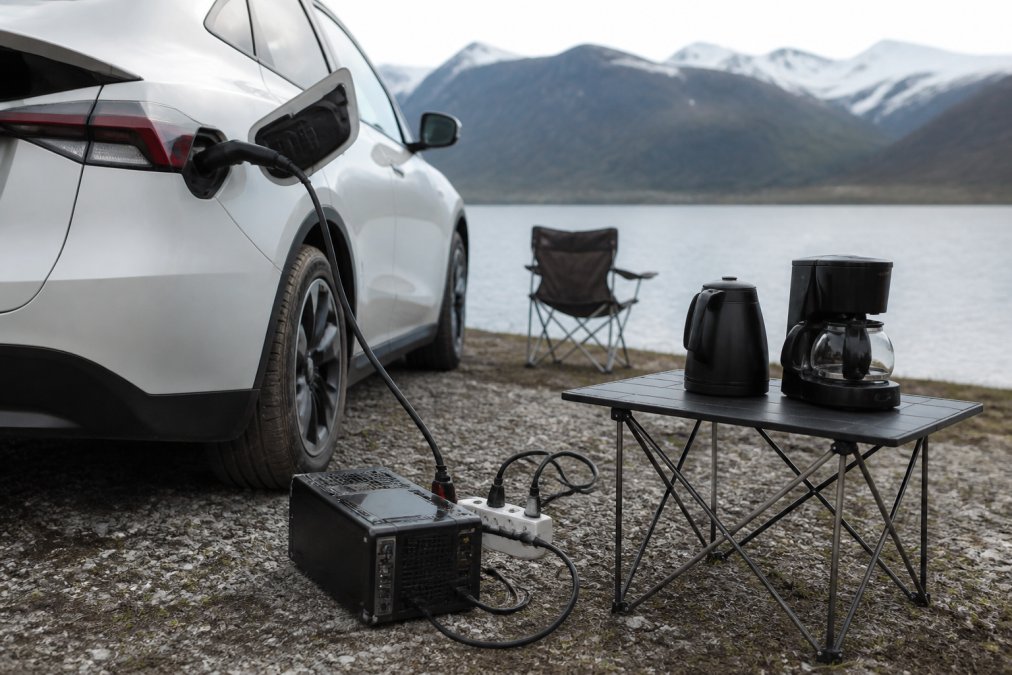
Best electric car 2026: Top models with range
Table of contents
- Quick comparison: Best electric cars 2026
- What makes an electric car the best in 2026
- Electric cars with V2L function: Power from your car
- Electric car range 2026: What does it mean in practice?
- Total costs and loss of value over 3-5 years
- Winter range in Danish climate: What do you expect?
- Conclusion: Which electric car is right for you?
- Frequently Asked Questions
Last updated: September 2, 2026
Quick comparison: Best electric cars 2026
Choosing the best electric car in 2026 isn't just about range and price. It's about which car suits your needs, what you'll use it for, where you live, and what matters most to you on a daily basis.
V2LPower has analyzed the most important electric cars on the market in 2026, and we focus on something that many guides overlook: not just how far the car can go, but what it can do for you when it's stationary. Can it power your house during a power outage? Can it charge other cars? Can it power your camping gear?
This guide covers the best electric cars 2026 with a focus on range, battery capacity, charging infrastructure, total costs over 3-5 years, winter range in Danish climate, and not least which models support the V2L function, power from your car for everything you need.
Quick overview:
- If you want the most bang for your buck and V2L functionality, look for models with at least 50 kWh batteries
- Winter range in Denmark typically drops 20-30% compared to summer driving
- The total cost over 5 years includes not only purchase, but also charging, maintenance, and depreciation
- V2L equipment from V2LPower makes it easy to get power from your car, no matter which model you choose
What makes an electric car the best in 2026
The best electric car in 2026 must deliver on several fronts simultaneously. Range without being unreasonably expensive. Charging infrastructure that works in practice. Safety equipment and assistance systems that keep you and your passengers safe. Driving characteristics that make everyday life fun, not just functional.
It's easy to get blinded by specs. A car with a 600-kilometer range sounds great, but if it costs 100,000 kroner more than an alternative with a 500-kilometer range, and you drive less than 200 kilometers per day, you're paying for something you never use.
Therefore, we look at four important parameters:
Battery capacity and kilowatt-hours. A larger battery means longer range, but also a higher price. The best electric cars 2026 offer batteries from 40 to 100+ kWh. For most Danish households, 60-75 kWh is the optimal point, it covers daily driving with a margin, without paying for overkill.
Charging speed and charging infrastructure. Fast charging is only worth something if you have access to it. Home charging at 11 kW (or 22 kW if you have 3-phase) is the daily life for most people. Fast charging on the highway is a bonus, not a necessity.

Total costs over 3-5 years. The purchase is just the beginning. Power, maintenance, insurance, and depreciation all matter. A more expensive car may have lower total costs if it holds its value better or uses less power.
V2L function. If your best electric car 2026 can power appliances outside the car, or even power your house, you'll get value out of the car outside of work hours. It's not a gimmick. It's practical emergency power when the grid goes down, or cheap power for camping and business.
The best electric car 2026 isn't the one with the longest range. It's the one that fits your daily needs, offers charging infrastructure you can trust, and provides the most value for money over 5 years.
Electric cars with V2L function: Power from your car
Here's where choosing the best electric car 2026 becomes interesting for many Danes. V2L, Vehicle-to-Load, means that power flows from your car to external electrical devices. It's not charging the car. It's the opposite: your car becomes a power source.
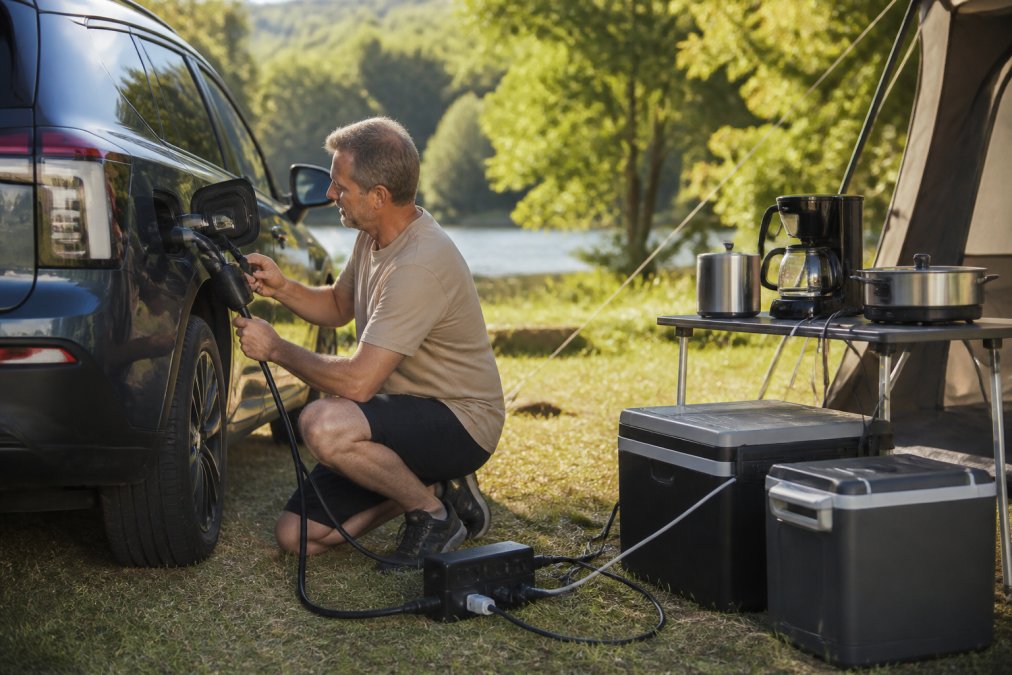
Not all electric cars support V2L. Those that do, especially models from Hyundai, Kia, and certain Nissan and BMW variants, open up possibilities that few people expect. You can go camping and have 230 V for your cooler. You can use the car as a backup during power outages. You can power handyman tools from the parking lot.
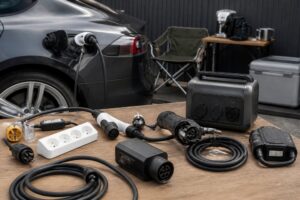
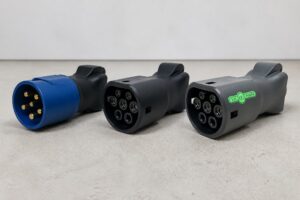
Technically, V2L works through your car’s Type 2 charging port. A V2L adapter (sometimes called an external V2L converter) converts your car’s DC power to standard 230V AC that your appliances can use. V2LPower offers certified V2L adapters designed to work safely with specific car makes and models, the main thing is to ensure compatibility so you avoid error messages like “V2L conditions not met”.
To use V2L, three things must be met: the car must support it, the adapter must be compatible, and the car must have enough battery (typically at least 20% for security). If your best electric car 2026 does not have V2L from the factory, some models can still be used with external V2L equipment, it depends on the car's electronics.
The V2L feature draws significant power from the car battery. A 3 kW load can drain 50 kWh in 16 hours. Always plan to have enough battery for both V2L use and your next drive.
If V2L functionality matters to you, and it does to campers, handymen, and people who want backup power, then the choice of the best electric car 2026 is already narrowing down. You're no longer looking for the cheapest or the one with the most range. You're looking for one that can deliver power when you need it.
Electric car range 2026: What does it mean in practice?
Range is the first number people look at when comparing electric cars. A best electric car 2026 with 600 kilometers of WLTP range sounds great. Until you realize that WLTP is a test cycle under ideal conditions, not reality.
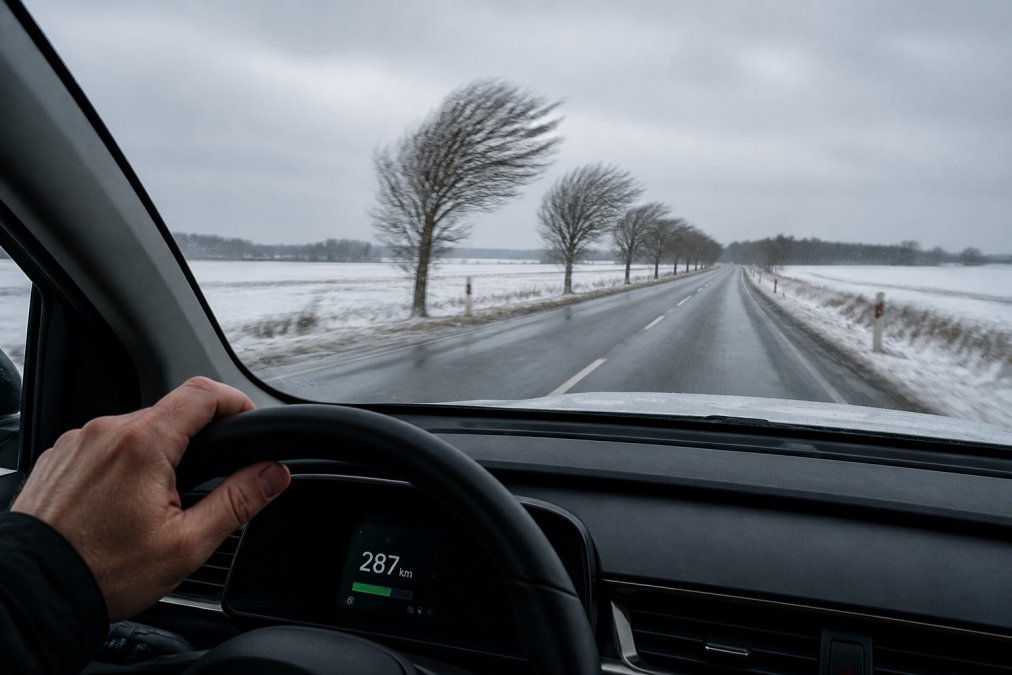
In practice, reach means three things:
WLTP figures vs. real range. WLTP is the standard test. It is consistent, but optimistic. A best electric car 2026 with 500 km WLTP will typically drive 400-450 km in real life, depending on weather, speed, and driving style. If you drive on the highway at 130 km/h in a wind, the number drops even further.
Winter range in Danish climate. This is where many guides get dishonest. They quote WLTP figures and disappear. A best electric car 2026 with 500 km range in the summer can drop to 350 km in the winter, a loss of 30% or more. Cold reduces battery efficiency, and heaters (especially seat heaters and window heaters) use significant power.
What does this mean for your daily life? If you drive less than 200 km daily and have access to home charging, range means almost nothing. You charge every night and never start the day with less than 80% battery. If you drive 400+ km daily or often take long trips without access to charging, range means a lot.

For most Danes, 60-75 kWh battery capacity, which gives 400-500 km WLTP, is more than enough. A best electric car 2026 with a smaller battery (40-50 kWh) saves money and is nicer to drive in the city. One with a larger battery (80-100+ kWh) gives peace of mind on long trips.
When comparing range, ask yourself: How far can I drive without being able to charge? If the answer is less than 300 km, a 60 kWh battery is sufficient. If it's 400+ km, you need to go up to 75+ kWh.
Total costs and loss of value over 3-5 years
This is where many guides fail. They compare the new car price and stop. A best electric car 2026 is not just the purchase price. It's the whole story of the years you own it.
Total cost of ownership (TCO) includes five components:
Purchase and financing. The new car price is the obvious one. Less obvious are financing costs. If you finance over 6-7 years instead of paying cash, the interest can add 10-15% to the total price. Leasing changes the equation completely, you pay a fixed monthly price for 3 years, and depreciation becomes the leasing company's problem, not yours.
Power and charging. An electric car typically uses 15-20 kWh per 100 km. At 0.25 DKK per kWh (an average Danish electricity price), this means around 4-5 DKK per 100 km. A traditional petrol car uses around 6-7 litres per 100 km, which at 12 DKK per litre means around 72-84 DKK per 100 km. The electric car is cheaper, much cheaper, but it is not free.
Maintenance and repair. Electric cars have fewer moving parts than petrol cars. No oil changes, less brake wear (due to regenerative braking), and longer service intervals. Over 5 years, you can save 10,000-15,000 kroner compared to a petrol car. The battery is guaranteed for typically 8-10 years, so you don't pay for battery replacement within 5 years.
Insurance and registration fee. Electric car insurance is typically 5-10% cheaper than petrol car insurance. The registration tax on electric cars has been reduced (85% of the normal tax in 2026), saving thousands on the purchase.
Loss of value. This is where it gets complicated. A best electric car 2026 holds its value better than a gasoline car, but the loss of value accelerates as the battery ages. A 3-year-old electric car typically loses 40-50% of its value. A 5-year-old electric car loses another 10-15% of its value. A gasoline car loses about 50-60% of its value over 5 years. So in the long term, the loss of value is similar.
Over 5 years this means: A best electric car 2026 for 400,000 kroner with a 60 kWh battery can have a TCO of around 550,000-600,000 kroner (including purchase, electricity, maintenance, insurance, and depreciation). A similar petrol car can have a TCO of around 650,000-700,000 kroner. The electric car saves around 100,000 kroner over 5 years if you have access to cheap home charging.
A best electric car 2026 is not always cheaper to own than a petrol car when you add everything up. But if you have access to home charging and drive more than 10,000 km annually, you will typically save 15,000-20,000 kroner annually compared to petrol.
Winter range in Danish climate: What do you expect?
This part of the guide is about the reality that most guides avoid. A best electric car 2026 driven in a Danish winter is not the same vehicle as the same car driven in the summer.
When the temperature drops to minus 5-10 degrees Celsius, three things happen simultaneously:
The battery loses efficiency. The chemistry of lithium-ion batteries slows down in the cold. A 500 km WLTP range drops to around 350-380 km. Not because the battery is smaller, it's the same battery, but because the energy density drops. It's like trying to run in the snow instead of on asphalt. You use more energy to get to the same place.
Heaters use a lot of electricity. Your battery doesn't just have to power the engine. It also has to heat the cabin. A seat heater uses about 1 kW. A window heater uses about 2-3 kW. A traditional electric heater uses about 5-10 kW. If you use these simultaneously, you could use 30-40% more power than you would in the summer. A best electric car 2026 with a heat pump (like Hyundai and Kia models have) reduces this loss to about 15-20%, because the heat pump is more efficient than direct resistance heating.
The driving style changes. Winter means lower speeds, more braking, and less fluid driving. This means more energy consumption.
Overall, this means: A best electric car 2026 with 500 km WLTP range has about 350 km real range in Danish winter. If you drive on the motorway in windy and cold weather, it may be even less.
For daily driving this doesn't matter much. You charge every night and start with a full battery. For long winter drives this means you need to plan charging stops more frequently.
| Weather conditions | Range reduction | Practical importance |
|---|---|---|
| Summer, 20°C | 0% | Baseline |
| Spring/Autumn, 10°C | 10-15% | Minimal impact |
| Winter, 0°C | 20-25% | Plan charging stops on long trips |
| Winter, -10°C | 30-35% | Significant loss, significant planning required |
Conclusion: Which electric car is right for you?
A best electric car 2026 is not a universal answer. It is the answer to your specific question.
If you want the most range for your money and V2L functionality, look at the Hyundai IONIQ 6 or Kia EV9. If you want the most reliable car with the best assistance systems, look at the Tesla Model Y or BMW i4. If you want the most fun to drive, look at the Porsche Taycan or Audi e-tron GT. If you want the cheapest, look at the Dacia Spring or MG4.
But if you want power from your car, for camping, for business, for emergency power at home, the choice becomes clearer. You need a car that supports V2L or V2H (Vehicle-to-Home). You need the right adapter or converter. You need the right setup at home.
V2LPower can help with the last part. We offer V2L adapters, external V2L converters, and Type 2 charging converters designed to work safely with your specific electric vehicle models. We produce guides and technical articles to ensure compatibility and safety. Our support is free and available throughout Europe.
Once you've chosen your best electric car 2026, you need to make sure you can get power from it safely. It starts with knowing which model you have, what it's capable of, and what equipment you need.
Frequently Asked Questions
Which electric car has the best range in 2026?
Range varies considerably between models. Premium models like the Tesla Model S Long Range and Mercedes EQE offer over 600 km of range in ideal conditions. For family owners, models like the VW ID.Buzz and Skoda Enyaq with 500+ km of range are more practical. Remember that winter range in Danish climates is typically 20-30% lower than the manufacturer's specifications.
What does V2L function mean on an electric car in 2026?
V2L (Vehicle-to-Load) means your electric car can supply power to external devices via an adapter or inverter. Power flows from the car's battery to your equipment - not into the car. This is ideal for camping, emergency power or tools on construction sites. Not all 2026 models have V2L, so check your car's specifications before purchasing.
Is it worth buying an electric car in 2026?
Yes, if you drive a lot and have access to home charging. The total cost of ownership (TCO) over 5 years is often lower than petrol or diesel thanks to low running costs, lower taxes and reduced maintenance. However, you need to consider your daily driving distance, access to charging and the budget for purchasing and installing a home charger.
Which electric cars are best in the winter cold?
Models with heat pump and battery heating cope best with Danish winters. Tesla Model 3/Y, VW ID.4, Hyundai Ioniq 5 and Kia EV6 have documented good winter performance. Expect 20-30% less range than summer figures. Charging on cold days also takes longer, especially fast charging.
What should I pay attention to when buying an electric car in 2026?
Evaluate range against your daily driving distance plus margin. Check the charging infrastructure on your routes and home charging options. Compare total costs, not just the purchase price. Check warranties on the battery (typically 8 years). And if you want V2L functionality, confirm that your car model supports it and that you have the right adapters or converters.
Read our V2L guide for more detailed information on how to use your electric car as a power source for home, camping, business, or emergency power. We help you get the most out of your investment.
This article was written using GrandRanker
 Danish
  English
  Swedish
  German
  Dutch
Dutch  Norwegian
  Chinese
  French
  Polish
  Italian
  Greek
Greek  Finnish
  Spanish
  Turkish
  Bulgarian
  Czech
Czech  Portuguese
  Bosnian
  Slovak
  Slovenian
  Romanian
  Hungarian
  Lithuanian
  Latvian
  Estonian
  Serbian
  Ukrainian