
Is V2L cheaper than the electricity grid? Real math
Table of contents
- What is V2L and how does it differ from the power grid?
- Cost comparison: V2L vs. the electricity grid
- V2L backup power for the house: When does it make economic sense?
- Wear and tear on electric car batteries at V2L: What is the real cost?
- V2L vs. power bank and generator: Economical comparison
- Practical applications where V2L can save money
- Legal and insurance aspects of V2L use
- Conclusion: Is V2L profitability real?
Last updated: August 25, 2026
What is V2L and how does it differ from the power grid?
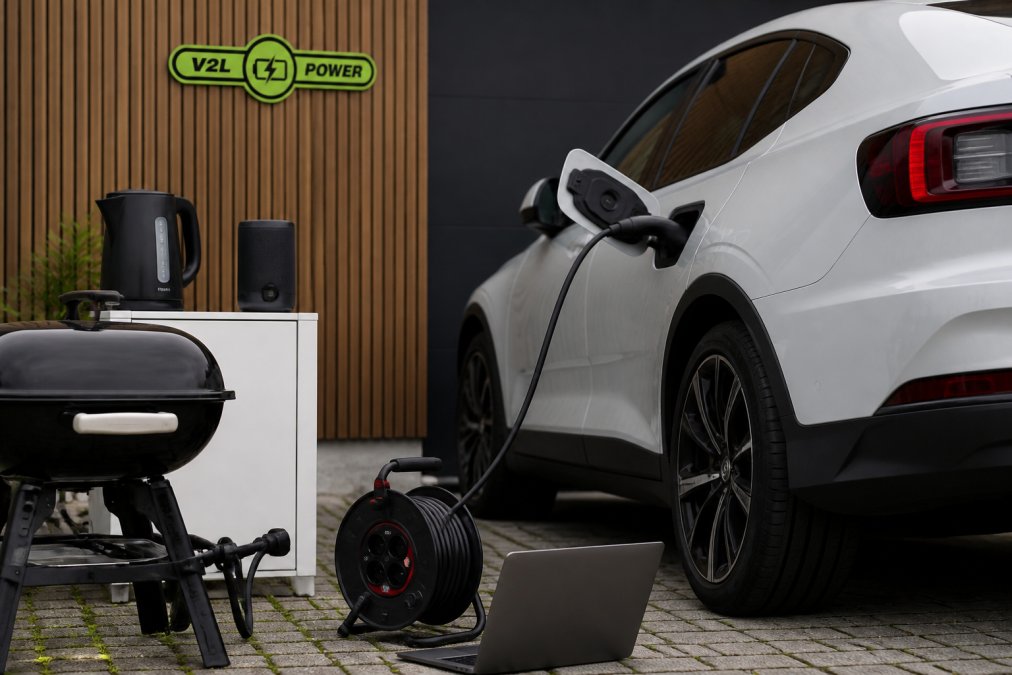
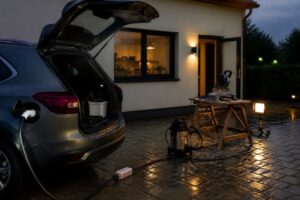
Vehicle-to-Load (V2L) is the technology that allows you to draw electrical power directly from your electric car's battery to external appliances and equipment. Unlike traditional mains charging, V2L energy flows from your car to everything from camping gear to tools to emergency power for your home.
The electricity grid is the centralized power supply that delivers electricity to your home sockets. It is reliable and regulated, but price-dependent on the energy market. V2L gives you flexibility and mobility because the power source is physically with you, you use energy you already own.
[V2L requires a compatible electric car, an adapter or converter](/v2l-adapter-price-and-quality-comparison/) and a secure cable connection. Not all electric cars support V2L yet, so check your car model before investing in equipment.
Most electric cars that support V2L can deliver between 2 and 3 kW of power through the Type 2 charging outlet, enough for camping, tools, and smaller household appliances.
Cost comparison: V2L vs. the electricity grid
The key question is: what does it cost to use V2L compared to the electricity grid?
The answer depends on your electric car's battery capacity, the electricity price in your area, and how much electricity you use. A typical 60 kWh electric car, where you use half for V2L (30 kWh) at an electricity price of around DKK 2 per kWh, means around DKK 60 in energy costs, the same as from the electricity grid.
But when using V2L, you have to factor in battery degradation. Each discharge cycle wears the battery down a bit, and that wear comes at a price. A professional V2L solution like the V2LPower systems is a one-time investment that becomes cheaper per use if you use the system regularly over several years.
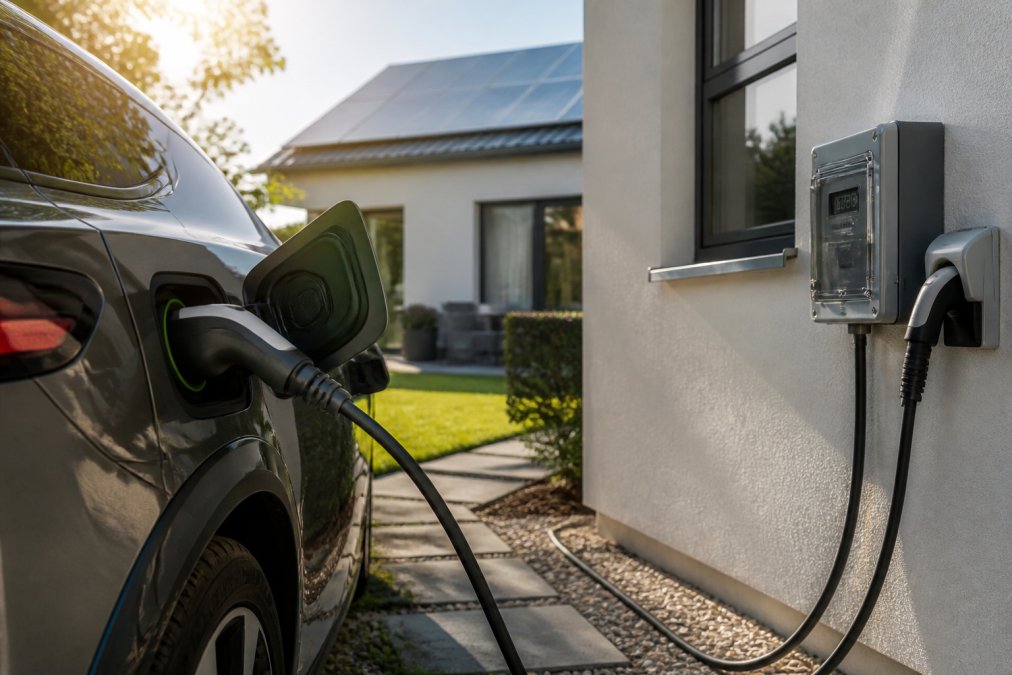
V2L can be economically viable, but only when you factor in battery life and installation costs.
V2L also provides independence from the power grid. If there is a power outage, or if you are on a trip without access to traditional power, is V2L indispensable.
V2L backup power for the house: When does it make economic sense?
Using V2L as backup power for your house is most interesting if you have solar panels or other renewable energy. You can charge your electric car with excess power from the solar panels and use the car's battery to power the house later.
Financially, it makes sense if you have solar panels that produce more power than you use, high electricity prices in your area, or concerns about security of supply.
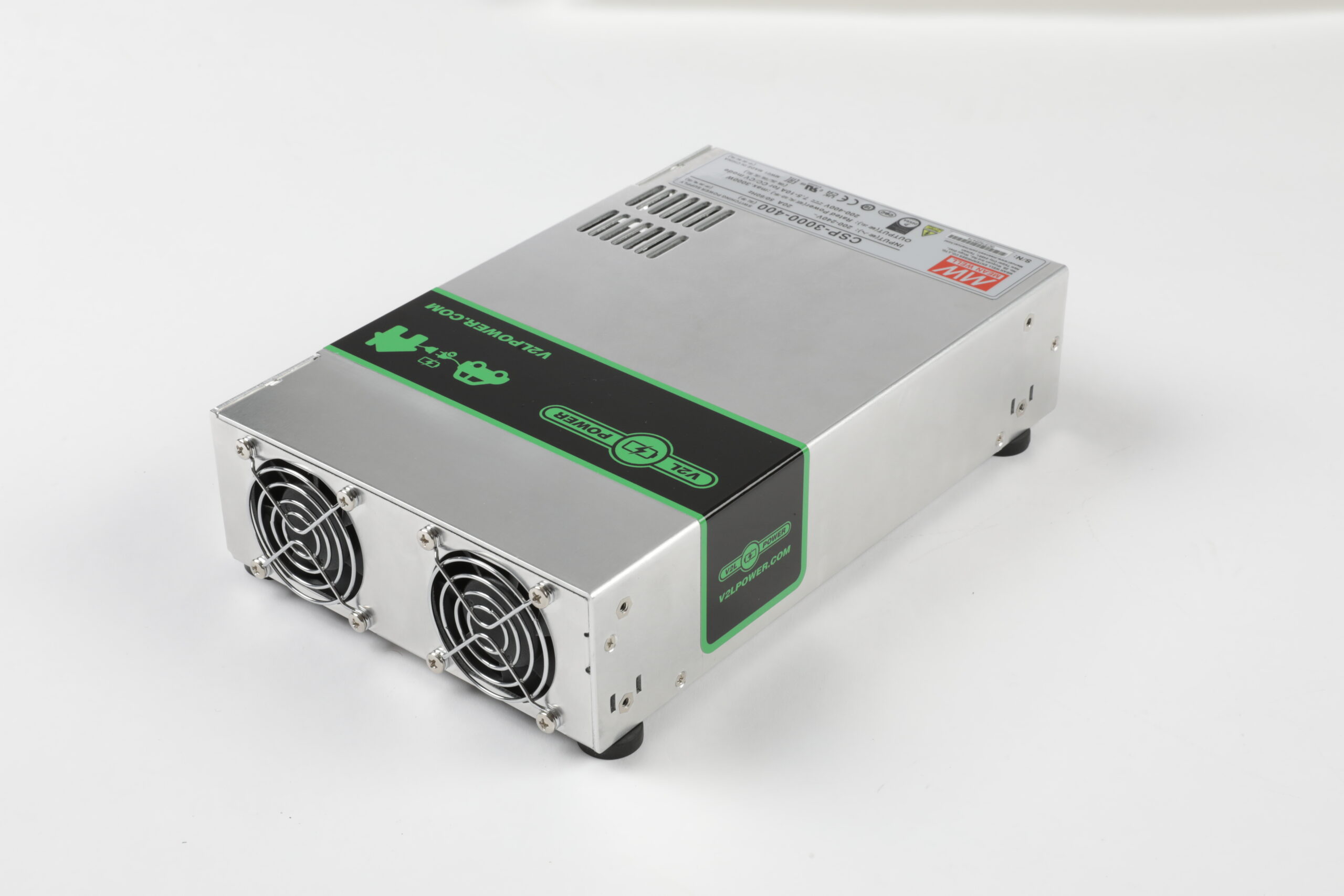
V2LPower solutions use professional Type 2 cables that activate the car's factory-installed V2L output and convert the power to 230 V AC, which can be connected to your house. The car's battery can then supply power to the house via a suitable installation, safely and efficiently. See for example. V2LPower – Car to house charger (p05) or V2LPower – Car to house charger (p06).
Without solar panels, you would have to charge the car from the grid and then use it again later, paying for electricity twice, which rarely makes financial sense. However, if there are power outages in your area, V2L as a backup may be worth the investment for safety reasons alone.
Wear and tear on electric car batteries at V2L: What is the real cost?
The battery in a modern electric car typically lasts 8-10 years or 150,000-200,000 km (fueleconomy.gov). Every time you discharge the battery, its capacity degrades marginally through two mechanisms:
Calendar aging: Your battery loses capacity simply by existing, about 2-3% annually under normal use.
Bicycle wear: Each discharge and recharge cycle affects capacity. V2L increases the number of cycles because you discharge the battery more often.
If an electric car battery costs around DKK 100,000 to replace and can deliver around 200,000 kWh over its lifetime, this means that each kWh of discharge "costs" around DKK 0.50 in battery costs. However, the battery costs are hidden and spread over time, you pay them when the battery needs to be replaced years later.
How do you measure your own battery degradation?
Most modern electric cars display the battery's State of Health (SOH) in the infotainment system or through an app. Check this value every month if you use V2L regularly. Normal degradation is around 0.5-1% per year (fueleconomy.gov). If you see faster declines, you are using V2L too aggressively.
If you regularly discharge your battery completely to zero for V2L, you risk shortening the battery's lifespan. Most electric cars are designed to retain around 10-15% capacity to protect the battery. V2LPower's systems have built-in protection that ensures the inverter does not draw more power than the car can deliver, and respects the car's own safety systems.
Practical Guide: When is V2L wear acceptable?
Casual use for camping a few times a year has almost no effect on battery life. Daily use to power your house can reduce battery life by 1-3 years, depending on how aggressively you discharge. A rule of thumb: if the V2L cost (0.50 DKK per kWh) plus the grid cost (2 DKK per kWh) exceeds 2.50 DKK per kWh, it is cheaper to use the grid alone. With solar panels or renewable energy, V2L becomes much more attractive.
V2L vs. power bank and generator: Economical comparison
A typical 10 kWh portable power bank can provide power for camping, but must be charged from the mains and is small. A 5 kW petrol generator can run independently, but must be filled with petrol and produces carbon emissions.
V2L solutions are quiet, produce no emissions, and require no fuel or maintenance. Over time, V2L becomes cheaper than both power banks and generators, especially with regular use.
| Solution | Operating cost per hour | Noise | Emissions |
|---|---|---|---|
| V2L (V2LPower) | ~0.50-2 kr. | No | No |
| Power bank (10 kWh) | Included in price | No | No |
| Gasoline generator (5 kW) | ~50-100 kr. | High | CO2 |
V2L is best for electric car owners who use it regularly. Powerbanks are better for casual users with small energy needs. Generators are most relevant for high-power equipment without a power grid.
Practical applications where V2L can save money
Camping and outdoors: Instead of buying a generator or power bank, you use your electric car for power for cooling, charging and lighting.
Tools and crafts: Tradesmen can use V2L to power tools on construction sites without power, saving on generator rental.
Emergency power in case of power outage: V2L can keep critical systems running, cold storage, heating systems, medical equipment.
Solar cell integration: Maximize the value of your solar system by storing excess energy in your electric car and using it later.

Home battery backup: V2L can act as a secondary source when your home battery is depleted, providing redundancy.
Legal and insurance aspects of V2L use
Before investing in V2L, you should be aware of the legal and insurance implications.
Insurance and liability
Most car insurance policies do not cover damage from V2L use. Contact your insurance company BEFORE you install V2L. Tell them exactly what you plan to do. Some may charge an additional premium, others may deny coverage altogether. If you do not inform the insurance company, they may refuse to pay out for any future damage related to V2L.
Electrical safety and certification
V2L systems must be CE approved and meet European safety standards (europe.eu). Cheap systems without certification can pose a fire hazard or damage your electrical system. Always check the CE mark, documentation for your car brand, and manufacturer warranty.
V2LPower's solutions are CE approved and built with professional Type 2 connectors. They respect the car's own safety systems so that the system cannot overload the battery.
Car warranty and manufacturer's liability
Read the warranty terms carefully. If you are using a certified V2L system like V2LPower's solutions that use the car's factory-built V2L output, this is typically considered "normal use." The manufacturer cannot deny warranty due to V2L use. Conversely, cheap, non-certified adapters may cause the manufacturer to deny warranty on the entire battery.
Installation and building regulations
If you are installing V2L permanently in your house, for example with a hardwired connection to the solar inverter, you may need to obtain a permit from your local authority or a licensed electrician. Temporary use (camping, tools, emergency power) typically does not require a permit with safe, certified systems.
Energy market and net metering
If you have solar panels and use V2L to store excess energy, be aware that some electricity companies do not allow "arbitrage" (buying cheap electricity and selling expensive electricity). Contact your electricity company and municipality before permanent installation.
The best way to avoid legal issues is to use certified systems, inform your insurance, and have professional installation.
Conclusion: Is V2L really profitable?
Is it cheaper to use V2L than the electricity grid? The answer depends entirely on your situation.
If you have solar panels, V2L can be very profitable over time by maximizing the value of your renewable energy investment. If you use it as backup power to avoid costly power outages, the value is significant, although not financial.
If you simply want to save money on regular daily electricity, V2L is rarely cheaper than the grid when you factor in battery costs.
V2L gives you flexibility, independence and security, values that cannot always be measured in dollars, but are real. If you are considering investing in V2L, it is recommended to start with a professional solution like V2LPower, which offers security, certification and support.
Frequently Asked Questions
Q: Can you really save money on your electricity bill by using V2L?
A: It depends on your electricity prices and how much power you use. If your electricity price includes taxes and tariffs, V2L may be cheaper for short-term use. However, for permanent backup or high power consumption, you need to consider battery wear and efficiency losses. A V2L inverter loses a certain percentage of energy during conversion, which affects the overall economy.
Q: How much wear does the electric car's battery get when using V2L?
A: V2L uses your battery's capacity, but no more than normal driving. Each charge and discharge cycle marginally affects the battery's lifespan. Modern electric cars have battery protection that prevents overdischarge. If you use V2L regularly, you should expect the same degradation as with normal daily driving. Manufacturers' warranties typically cover 8-10 years or 160,000 km.
Q: What is the difference between V2L and V2H in terms of costs?
A: V2L means power from the car to external devices (camping, tools). V2H means car-to-home, where the car supplies the entire house. V2H requires the installation of a dedicated inverter and wiring, which is more expensive in initial investment. V2L is more flexible and cheaper to install, but cannot provide the same power capacity continuously to the entire house.
Q: Which devices are most economical to operate with V2L?
A: Low-power devices such as laptops, lamps, small coolers and tools under 1000 W are economical to operate with V2L. High-power devices such as air conditioning, electric kettles or large stoves require significant power and make V2L less profitable. Camping and outdoor use are ideal for V2L, where you avoid high electricity prices for short-term consumption.
Are you using V2L as backup power or for camping? V2LPower offers complete car-to-home packages with professional Type 2 cables, inverters with a 5-year manufacturer's warranty, and free email support throughout Europe. The systems are CE approved, safe and designed for permanent use. READ OUR V2L GUIDE and find the solution that suits your electric car.
This article was written using GrandRanker

 Danish
 English
 Swedish
 German
 Dutch
 Norwegian
 Chinese
 French
 Polish
 Italian
 Greek
 Finnish
 Spanish
 Turkish
 Bulgarian
 Czech
 Portuguese
 Bosnian
 Slovak
 Slovenian
 Romanian
 Hungarian
 Lithuanian
 Latvian
 Estonian
 Serbian
 Ukrainian