
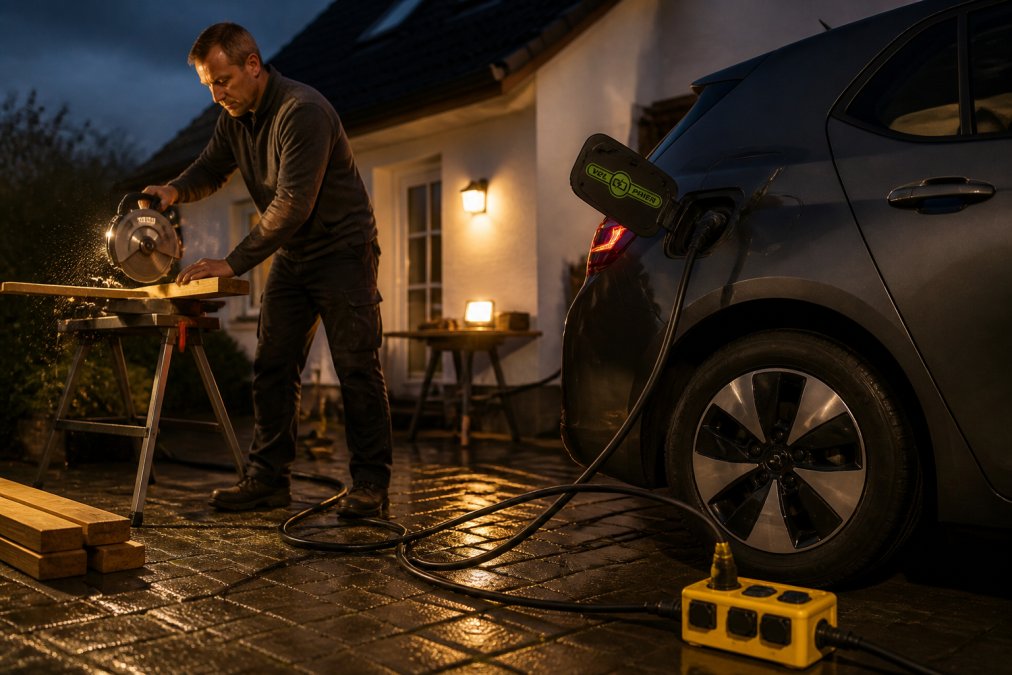
Electric car as emergency power: A complete guide to V2H
Table of contents
- What is V2H and how can your electric car become emergency power?
- The difference between V2L, V2H and V2G – which solution is right for you?
- V2L adapter electric car: How does V2L work and what do you need to know?
- Electric cars with V2H technology – which models support it?
- Danish Safety Technology Authority rules for V2H and legal requirements in Denmark
- Installation and practical setup of an electric car as emergency power
- Advantages, limitations and battery wear of using an electric car as emergency power
- Conclusion
Last updated: August 9, 2026
What is V2H and how can your electric car become emergency power?
V2H (Vehicle-to-Home) er teknologien, der gør det muligt for din elbil at levere strøm direkte til dit hus. I stedet for kun at modtage strøm fra nettet, kan din elbil nu blive en mobil strømkilde, især værdifuld under strømafbrydelser eller når du ønsker energiuafhængighed. 🔌
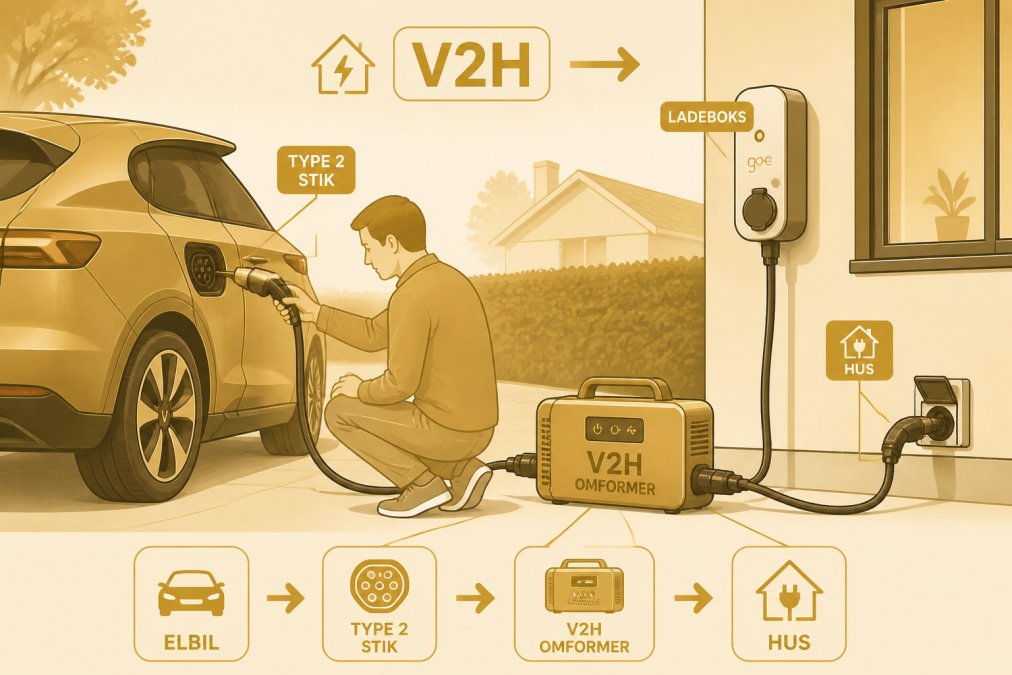
V2H works through a bidirectional charger that allows power to flow from the car's battery to your house via an inverter. This technology converts the direct current stored in the car's battery into alternating current that your house can use. Electric cars as emergency power for the house is no longer science fiction, it is a practical reality for thousands of Danish homeowners.
The most important advantage of V2H is that you have a massive power buffer on wheels. Most house batteries contain 10-15 kWh. A modern electric car contains 50-100 kWh. So you get three to ten times more power stored, and you can use it both at home and on the go.
What makes it different from regular EV charging? With regular charging, the car receives power. With V2H, the car sends power. This bidirectional charging requires special hardware and software that ensures that power flows safely in both directions without damaging the car's battery or your electrical system.
The difference between V2L, V2H and V2G – which solution is right for you?
The technologies are similar in name, but they solve completely different problems. Understanding the differences is crucial to choosing the right solution for your needs.
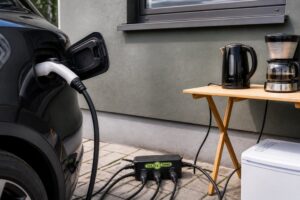
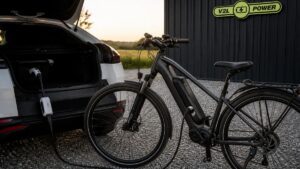
V2L (Vehicle-to-Load) means that your electric car supplies power to external devices through an adapter or converter. You connect tools, camping equipment or electrical devices directly to a port on the car or through an external converter. V2L adapter electric car works without special installation, it is plug-and-play. Typical output is 2-3 kW, which is enough for most camping and crafts tasks.
V2H (Vehicle-to-Home) integrates your electric car with your home's electrical system through a two-way charging box. The power from the car's battery flows through the inverter into your home's mains connection. You can power the entire house or specific circuits, depending on the capacity of the system. Installation requires a licensed electrician and approval from your power company.
V2G (Vehicle-to-Grid) is the next step, your electric car can not only supply power to your house, but also to the public electricity grid. This requires even more advanced hardware and means you can potentially make money by selling power back to the grid at times of high demand. V2G is still being implemented in Denmark and requires special agreements with your electricity company.
| Technology | Power source | Installation | Typical effect | Best for |
|---|---|---|---|---|
| V2L | Electric car port or external converter | No | 2-3kW | Camping, tools, outdoor |
| V2H | Bidirectional charging box + housing | Authorized electrician | 6-11kW | Emergency power, energy storage, home |
| V2G | Bidirectional charging box + power grid | Authorized electrician + electricity company | 6-11kW | Emergency power + network revenue |
Which one should you choose? If you are camping or working on construction sites, V2L is your answer. If you want backup power for your home or want to reduce your electricity bills, V2H is the solution. V2G is for those who want to maximize the value of their battery by participating in grid balancing.
Many people confuse V2L with EV charging. V2L does NOT mean you charge your car. It means the car provides power. If you use V2L while camping and forget to charge your car afterwards, you are stranded with a dead battery.
V2L adapter electric car: How does V2L work and what do you need to know?
A V2L adapter electric car is the simplest way to get power from your car. The technology is quite straightforward: an adapter plugs into a dedicated port on the car, and you can then connect regular appliances via standard 230V sockets.
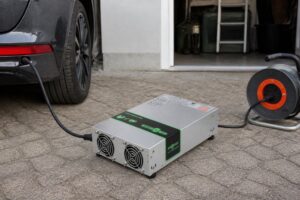
How does it work technically? The car contains a built-in converter that converts the battery's DC power to 230V AC power. The adapter is simply the wire that connects the car to your devices. Some cars have a dedicated V2L port, while others require an external converter that connects via the Type 2 charging socket.
The most important thing to know about the V2L adapter electric car:
- Effect: Typically 2-3 kW continuous output. That's enough to power a power tool, a camping fridge or several smaller appliances simultaneously.
- Duration: You can use V2L as long as your battery has power. A 60 kWh battery can theoretically provide 20-30 hours of power at 2-3 kW consumption.
- Security: Modern V2L systems have built-in overload protection. If you plug in something that draws too much current, the system will automatically shut down.
- Compatibility: Not all electric cars have V2L. Tesla models without V2L require an external converter. Hyundai, Kia and Nissan have several models with built-in V2L.
V2L adapter electric car is the most flexible system because it does not require installation at home. You can use it at the campsite, at the construction site or anywhere you need power. It is also the cheapest alternative if your car already has the V2L function.
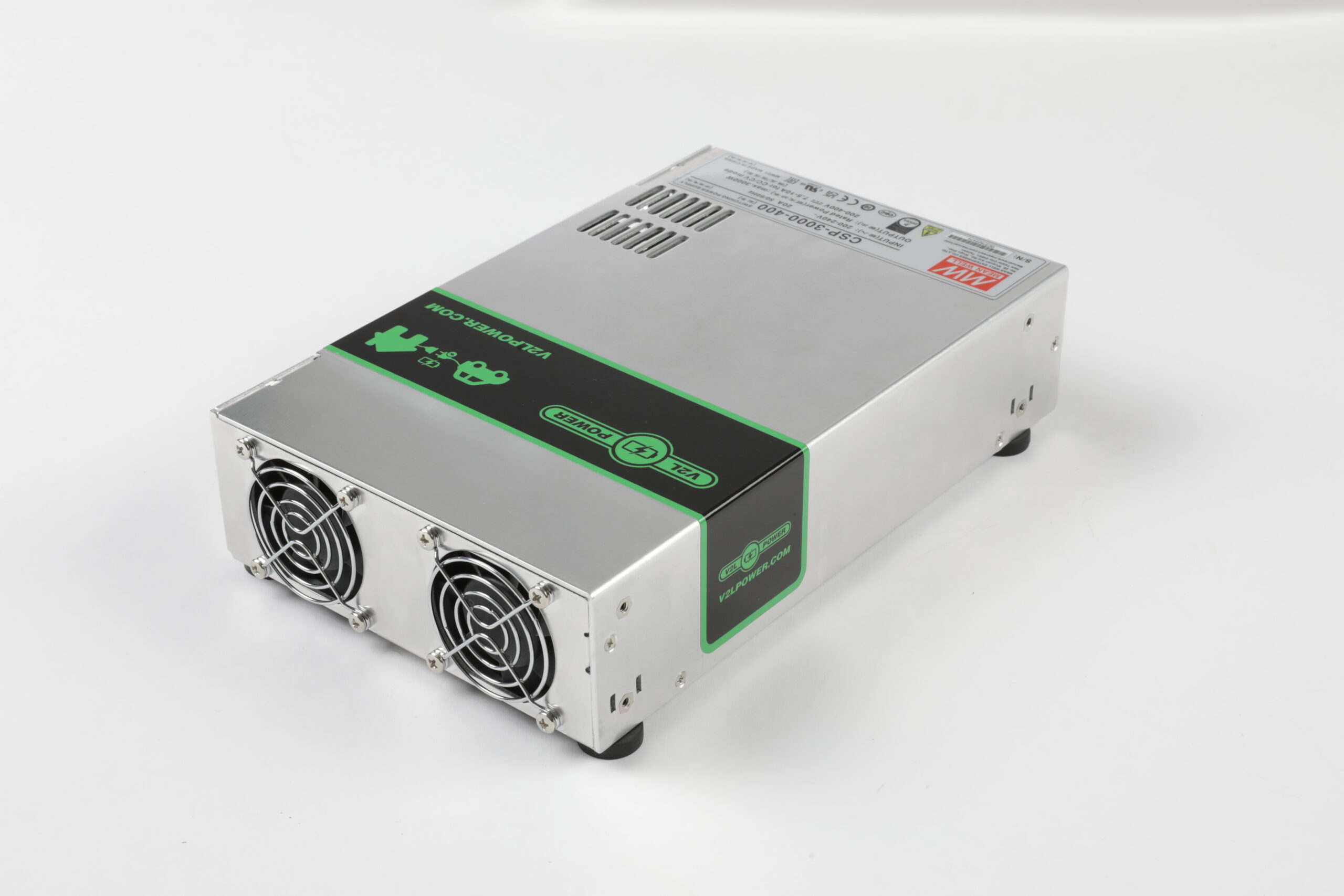
An external V2L converter (such as V2LPower offers) gives you V2L functionality even on cars without a dedicated V2L port. It plugs into the Type 2 charging socket and converts the power to 230V. This opens up the possibility of V2L on almost any electric car, regardless of manufacturer.
Electric cars with V2H technology – which models support it?
Not all electric cars can be used for V2H. You need a model with bidirectional charging capacity, meaning a car whose battery can send power back out of the car.
Hyundai and Kia is leading the way here. The Ioniq 5, EV6, Niro EV and Sorento EV all support V2H. These models feature CHAdeMO or 800V architecture, which enables fast bidirectional charging.
Nissan was actually a pioneer with the Leaf, which has supported CHAdeMO-based V2H since around 2012. If you have an older Leaf, you can still use it for V2H.
Volkswagen ID.4 and ID.5 supports V2H via CHAdeMO adapters, although they primarily charge via Type 2. New VW models with 800V architecture will get better V2H support.
BMW i4 and Mercedes-Benz E-Class is among newer models with V2H potential, although the market is still developing.
Tesla models doesn't have official V2H support yet, but it's in development. For now, you can use V2L on Model 3 and Model Y.
Important to note: Even if your car technically supports V2H, your electricity company must also approve the system. In Denmark, approval from your local grid operator is required before installation. Some grid operators have restrictions or require special agreements.
V2H is best for homeowners with newer Hyundai, Kia or Nissan models who want backup power and energy optimization. If you have a Tesla or older electric car without two-way charging, V2L is your alternative.
Danish Safety Technology Authority rules for V2H and legal requirements in Denmark
V2H is not just a technical issue, it is also a legal and security issue. In Denmark, the installation of V2H systems is regulated by several authorities and standards.
Danish Safety Technology Authority has issued guidelines for the installation of V2H systems in private homes. The system must be installed by an authorized electrician who is a member of TEKNIQ Employers or a similar approved organization. Installation must follow Danish Standard DS/EN 61851-1 for charging equipment and DS/EN 62196 for plugs and sockets.
Your electricity company must approve the system before it is installed. The electricity company must ensure that the system does not negatively affect the grid or create a danger to other consumers. This approval can take 2-4 weeks.
Insurance: Contact your homeowners insurance company before installation. Some insurance companies require the system to be approved and installed by certified tradesmen. Others have chosen not to cover V2H systems altogether yet.
Warranty conditions: Your electricity company cannot force you to pay extra for V2H, but it may require you to install a smart meter that measures electricity in both directions. Some electricity companies also offer tariffs that reward you for feeding electricity back into the grid during peak periods.
Battery wear: A major concern is whether V2H will damage your car's battery. Modern batteries are designed to withstand thousands of charge and discharge cycles. The V2H system monitors the battery and avoids extreme temperatures and voltages. Car manufacturers typically offer 8-10 year warranties on the battery, and V2H does not affect this warranty as long as the system is properly installed.
Installation and practical setup of an electric car as emergency power
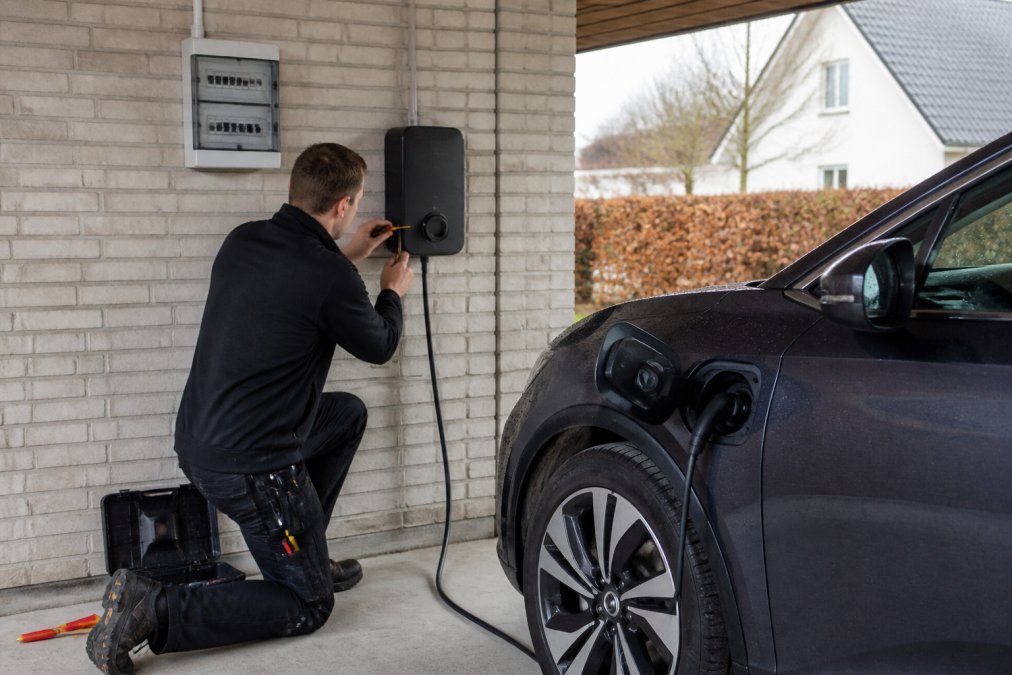
Installing V2H is not something you do yourself. It requires a licensed electrician and several steps of approval. Here is the process:
Step 1: Contact your electricity company
Call your grid operator or utility company and ask if they approve V2H systems. Get their requirements and any restrictions in writing. Some utilities have dedicated V2H programs; others treat it as a standard grid connection.
Step 2: Find a licensed electrician
Contact an electrician who has experience with V2H installation. The electrician must be a member of TEKNIQ Employers or a similar approved organization. Ask for references from previous V2H installations.
Step 3: Choose your V2H system
You have to choose between a factory-fitted solution (such as Hyundai or Kia offer) or a third-party solution. V2LPower offers complete V2H packages, which are compatible with several car brands. The system must be CE marked and approved according to DS/EN standards.
Step 4: Electrician performs the installation
The electrician will install the bidirectional charging box, connect it to your house's mains connection, and ensure that the system communicates correctly with the car. Installation typically takes 1-2 days.
Step 5: Grid operator inspection
The network operator is inspecting the system to ensure it does not affect the network. This may take 1-2 weeks.
Step 6: Activation
Once everything is approved, you activate the system through the car or system app. You can now start using the electric car as emergency power for the house.
Practical tip: Install a smart meter that measures your electricity usage in real time. This allows you to optimize when you charge your car (when electricity is cheap) and when you use electricity from your car (when electricity is expensive). Over time, this can pay for the system’s installation.
A common mistake is to assume that V2H acts as automatic backup power. It does not. If the grid goes down, the system must be switched manually or through a smart controller. Without this switching equipment, you will have no power during a power outage. Make sure your installation includes a switch or UPS function.
Advantages, limitations and battery wear of using an electric car as emergency power
The advantages are significant:
An electric car as emergency power for your home gives you energy independence. You are no longer completely dependent on the grid. During power outages, you can power important appliances such as a refrigerator, heating and lights for days. A 60 kWh battery can theoretically power an average home for 2-3 days with moderate consumption.
Economically, you can save money by charging your car when electricity is cheap (typically at night and weekends) and using electricity from your car when electricity is expensive (typically on weekdays). With V2G, you can even make money by selling electricity back to the grid.
Environmentally, V2H reduces your dependence on fossil-based backup power and batteries. You use the energy you have already invested in the car's battery.
The limitations are also important:
First of all, there is an initial installation cost. A complete V2H installation costs between DKK 10,000 and DKK 20,000, depending on the system and your house's electrical infrastructure.
Second, V2H is not completely automatic. You have to plan your energy usage. If you use the entire car battery on emergency power, you will have no power to drive the next day. Most people keep at least 20-30% of the battery reserved for driving.
Third, compatibility is still a challenge. Not all electric cars support V2H. If you have a Tesla or older electric car, you're out of the market (unless you use V2L instead).
Battery life, the big concern:
Yes, V2H affects your battery. Every time you discharge and charge, it affects the battery's lifespan. However, modern electric car batteries are designed to withstand thousands of cycles. The average electric car owner charges their car 3-4 times a week. V2H can increase this to 5-6 times a week if you use the system actively.
According to battery manufacturers, you can expect the battery to lose around 2-3% of capacity per year under normal use. With V2H, this can increase to 3-4%. So after 10 years, you can expect to have around 70-75% of the original capacity left instead of 75-80%.
But here's the important thing: car manufacturers typically provide an 8-10 year warranty on the battery. V2H does not affect this warranty as long as the system is properly installed. If the battery falls below 70% capacity within the warranty period, the manufacturer will replace it free of charge.
Battery degradation is real, but it's not catastrophic. It's a conscious trade-off: you accept slightly faster battery aging in exchange for energy independence and potential financial savings. For most people, it's a good trade-off.
Electric car as emergency power for the house is no longer a technology of the future, it is a practical solution available today. Whether you want backup during power outages, energy optimization or just flexible power for camping and work, there is a solution that suits you. V2LPower specializes in helping Danish electric car owners get the most out of their car's energy through V2H and V2L solutions that are safe, certified and designed specifically for your car model. Let your electric car work for you, both on the road and at home.
Frequently Asked Questions
Which electric cars can provide power to the house as emergency power?
Not all electric cars support V2H or V2L. The Hyundai Ioniq 5, Kia EV6, and Nissan Leaf Plus are among the few models that can provide power back to the house or external appliances. Always check your car's documentation or contact the manufacturer to confirm V2H capability. V2L functionality is more widespread and available on many newer models, but requires a suitable adapter.
Is V2H legal in Denmark according to the Danish Safety Technology Authority?
V2H installations in Denmark must comply with the Danish Safety Technology Authority's regulations for electrical installations and must be carried out by a licensed electrician. Your V2H solution must be certified and approved. It is important to report the installation to your electricity company and ensure that the system has the necessary safety equipment such as residual current devices. Always contact a licensed electrician before installation.
How long can an electric car power my house?
It depends on the car's battery capacity and your home's power consumption. An electric car with a 60 kWh battery can theoretically power an average Danish home for 12-24 hours at reduced consumption. A smaller appliance like a lamp or refrigerator can run much longer. In case of emergency power, you should prioritize critical equipment and avoid high-consumption appliances like dishwashers or electric heaters to maximize the time.
What is the difference between V2L, V2H and V2G?
V2L (Vehicle-to-Load) supplies power from the car to mobile devices via an adapter or converter – ideal for camping and outdoor use. V2H (Vehicle-to-Home) connects the car to the house’s electrical system via a two-way charging box and can power the entire house. V2G (Vehicle-to-Grid) allows the car to send power back to the grid, which can provide financial compensation. V2H requires the installation of an approved charging box, while V2L can be used with portable equipment.
What type of equipment can a V2L inverter actually power?
A V2L inverter can power most household appliances up to their maximum power – typically 1000-3600 W. This includes lamps, computers, refrigerators, small heaters, tools and camping equipment. Appliances with very high starting power (such as air conditioners or large electric heaters) can overload the system. Always check the appliance's power consumption and compare it to the inverter's maximum capacity before connecting.
Does V2H use affect my car's battery warranty?
Most EV manufacturers do not guarantee battery capacity against loss due solely to V2H use. However, modern EV batteries are designed to withstand many charge and discharge cycles. Using V2H regularly can have a marginal but not dramatic impact on battery life. Contact your vehicle manufacturer to confirm warranty terms, and avoid discharging the battery below 10-20 % to maintain health.
This article was written using GrandRanker
 Danish
  English
  Swedish
  German
  Dutch
Dutch  Norwegian
  Chinese
  French
  Polish
  Italian
  Greek
Greek  Finnish
  Spanish
  Turkish
  Bulgarian
  Czech
Czech  Portuguese
  Bosnian
  Slovak
  Slovenian
  Romanian
  Hungarian
  Lithuanian
  Latvian
  Estonian
  Serbian
  Ukrainian