
V2L adapter price and quality: Comparison 2026
Table of contents
- What is a V2L adapter and how does it work?
- V2L adapter price and quality: Overview of available solutions
- V2L compatibility electric car: What you need to know before buying?
- Safety of V2L adapters: Original vs. non-original
- Electric car charging socket: The Type 2 connection and its role
- External V2L converter: When a simple adapter is not enough
- Practical use: Camping, backup power and business
- How do you choose the right V2L adapter for your situation?
Last updated: August 23, 2026
What is a V2L adapter and how does it work?
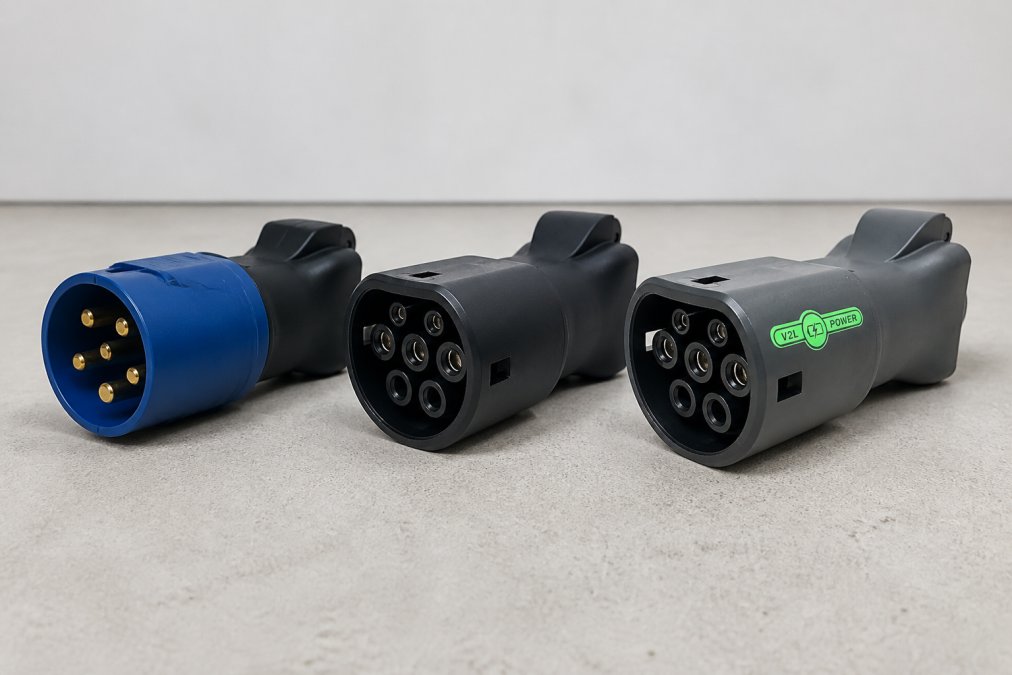
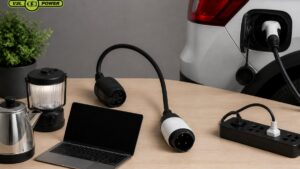
One V2L adapter stands for Vehicle-to-Load – power flows from your electric car out to external electrical devices. It’s not charging the car; it’s the opposite. You use your car’s battery as a mobile power source for camping gear, tools, household appliances, or emergency power at home.
Type 2 charging ports on modern electric cars can supply power to external devices. A V2L adapter connects this charging port to a standard Schuko socket (230 V). When you plug in the adapter, it communicates with the car's software through a handshake protocol - a security sequence that confirms that everything is properly connected before power flows.
The quality of a V2L adapter depends on safety certification, build quality, compatibility with your specific car model, and how it handles power delivery under load. Cheap alternatives risk triggering error messages like "V2L conditions not met" or damaging your car's electrical system. V2LPower specializes in certified solutions, that works reliably without these problems.
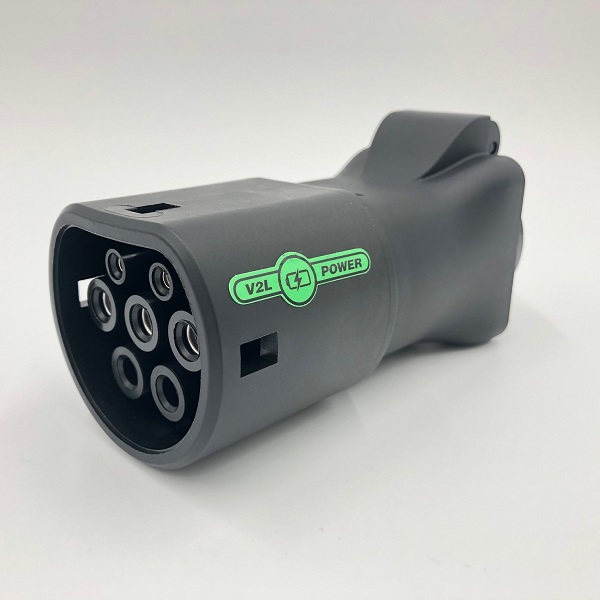
The main difference between original adapters and third-party solutions lies in safety certification and compatibility. A cheap adapter may work once, but fail when you need it most.
V2L adapter price and quality: Overview of available solutions
When comparing V2L adapters, you'll come across three price ranges: budget solutions, mid-range, and professional converters. Each class serves a purpose.
Budget adapters are simple Type 2-to-Schuko connections without advanced electronics. They work for simple tasks like charging a tablet or powering a small fan. The problem: they often lack proper safety certification and can't handle higher-power devices. Many users report that their car's software blocks the connection.
Mid-range adapters offers better build quality, safety certification and compatibility with several car brands. They can handle moderate power consumption – a coffee maker, power tools or camping equipment without any problems. This is where V2LPower operates with its Type 2 to Schuko adapters.
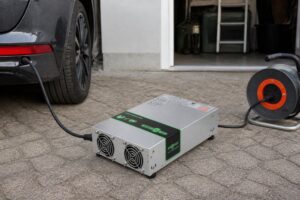
Professional converters are external devices that offer higher power limits and better stability. They are designed for commercial use or if you want to use your car as backup power for the whole house.
| Price range | Best for | Limitations |
|---|---|---|
| Budget | Small electronics, testing | Lack of security, low power consumption |
| Middle class | Camping, tools, household | Moderate power limit |
| Professional | Business, backup power, high power | Larger size |
V2LPower adapters: Quality and price
V2LPower offers Type 2-to-Schuko adapters designed to work reliably without triggering error messages or safety issues.
The main difference between V2LPower’s models lies in the build quality and compatibility with different car brands. Each adapter is tested specifically for individual electric car models – BYD, Hyundai, Kia and others – so you know the handshake protocol will work without any problems. Cheap alternatives are generic and assume that all Type 2 ports work the same. They don’t.
When you purchase a V2LPower adapter, you get free email support throughout Europe, and if problems arise, you can get help with troubleshooting.
V2LPower adapters work without damaging your car or frustrating you with error messages.
V2L compatibility electric car: What you need to know before buying?
Not all electric cars have V2L functionality. Some car brands have disabled it in software, even though the Type 2 port can physically deliver power. Others require a software update before V2L works.
Hyundai Ioniq 5, Kia EV6, BYD Yuan Plus and newer Volkswagen ID. Buzz all have V2L as standard. Tesla, Renault Zoe and some older models do not. Check your car manufacturer's official documentation or contact a dealer if you are unsure.
Once you have confirmed that your car supports V2L, compatibility is all about the handshake protocol. A generic adapter may lack the precise electronics to complete this sequence correctly, resulting in the error message "V2L conditions note met".
V2LPower tests each adapter for specific car models before releasing it. If you purchase an adapter designed for your car, compatibility is guaranteed.
Purchasing a V2L adapter without confirming compatibility with your specific car model means you risk getting a device that doesn't work. Some low-cost providers don't accept returns on V2L equipment.
Safety of V2L adapters: Original vs. non-original
Safety is where cheap V2L adapters fail most critically. An adapter must handle 230V AC and power consumption of up to 16 amps (3.7 kW). If the electronics are not is designed properly, voltage drops, overload protection failure, poor grounding, or handshake errors may occur.
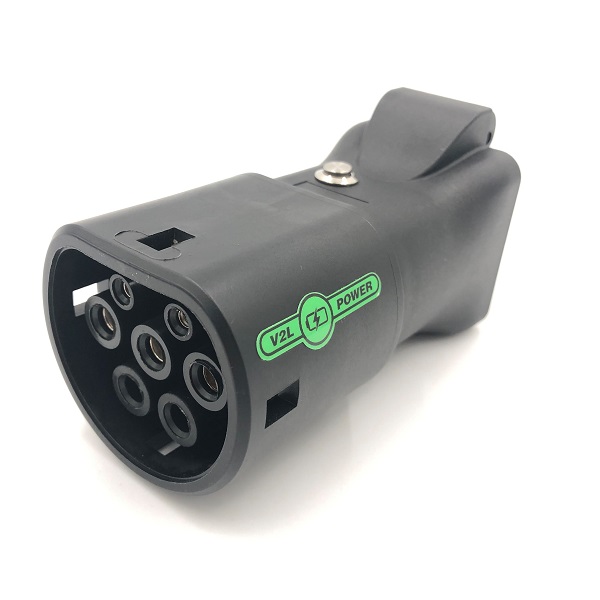
Important safety certifications:
CE marking: This is the most important sign. CE means that the adapter meets European safety standards (Low Voltage Directive 2014/35/EU). Cheap adapters often have no CE marking or a fake CE marking.
IP rating: This describes how waterproof and dustproof the adapter is. IP54 or higher can be used outdoors without risk of moisture or dust (iec.ch). Cheap adapters often only have IP20 (indoor use only).
Overload protection: A quality adapter has a built-in fuse or electronic overload protection that cuts off power in the event of a short circuit. Cheap adapters may lack this altogether.
Insulation test: Certified adapters undergo insulation testing according to IEC 61010-1 or similar standards (iec.ch). This ensures that there is no risk of electric shock. Cheap adapters are rarely tested for this.
Handshake protocol validation: The Type 2 port communicates with the adapter through the control contacts. An adapter that does not implement this protocol correctly can cause the car's software to block the connection. Cheap generic adapters often do not test this communication properly.
Practical example: A cheap adapter without proper overload protection may work fine with a lamp (50 W). But when you plug in a coffee maker (1,500 W), the current can suddenly increase. If the adapter doesn't have the electronics to handle this, it can get hot, cause voltage drops, or trigger the car's safety system without warning.
A certified adapter like V2LPower has electronics that monitor the power and safely adjust or disconnect the connection if problems arise.
Warranty implications: If you use a non-genuine adapter without proper safety certification and damage occurs to your car's charging port, battery, or electrical system, the car manufacturer may refuse to cover the damage under warranty. A certified adapter gives you legal protection.
When purchasing a V2L adapter, you will need:
1. Check that it has the CE marking
2. Ask the seller about IP rating and overload protection
3. Read the warranty terms – if the manufacturer doesn’t offer a warranty, it’s a red flag
4. Avoid adapters without documentation or from unknown brands without online support
A certified adapter actually works without causing any problems or risking your warranty.
Electric car charging socket: The Type 2 connection and its role
The Type 2 plug – also known as the Mennekes plug – is the standard for AC charging in Europe. It consists of seven contacts: three for AC power, one for ground, and three for communication and control.
When a V2L adapter is connected to the Type 2 port, it uses these contacts to deliver power through the Schuko plug. At the same time, the adapter communicates with the car's software through the control contacts. This handshake ensures that the car has permission to deliver power, that the battery charge level is high enough (typically at least 20 %), and that the car's thermal system can handle the power draw.
How the handshake protocol works:
The Type 2 connection uses a communication protocol based on the ISO 15118 standard (iso.org). When you connect a V2L adapter, the following sequence occurs: physical connection, identification (the adapter tells the car that it is a V2L adapter), validation (the car's software checks if the adapter is authorized), power authorization (the car grants permission to supply power), and continuous monitoring (the car continuously monitors the power).
If the adapter does not implement this protocol correctly, the handshake will fail and you will get the error message "V2L conditions not met".
Contact quality and electrical resistance:
The physical connection between the adapter and the Type 2 port is critical. Cheap adapters often have loose connectors, poor contact material without proper nickel plating, or no strain relief. The result is voltage drop under load, heat generation, handshake failure, or in the worst case, fire.
V2LPower adapters are designed with high-quality connectors: precision connectors, nickel-plated copper, proper strain relief, and tested handshake with the specific car model.
Practical example: On a camping trip, you connect an air conditioning unit (1,500 W). A cheap adapter with poor contact quality can start without any problems, but after 10 minutes the voltage starts to drop. The air conditioning unit is malfunctioning and the car software disconnects the connection. A V2LPower adapter maintains stable voltage at all times.
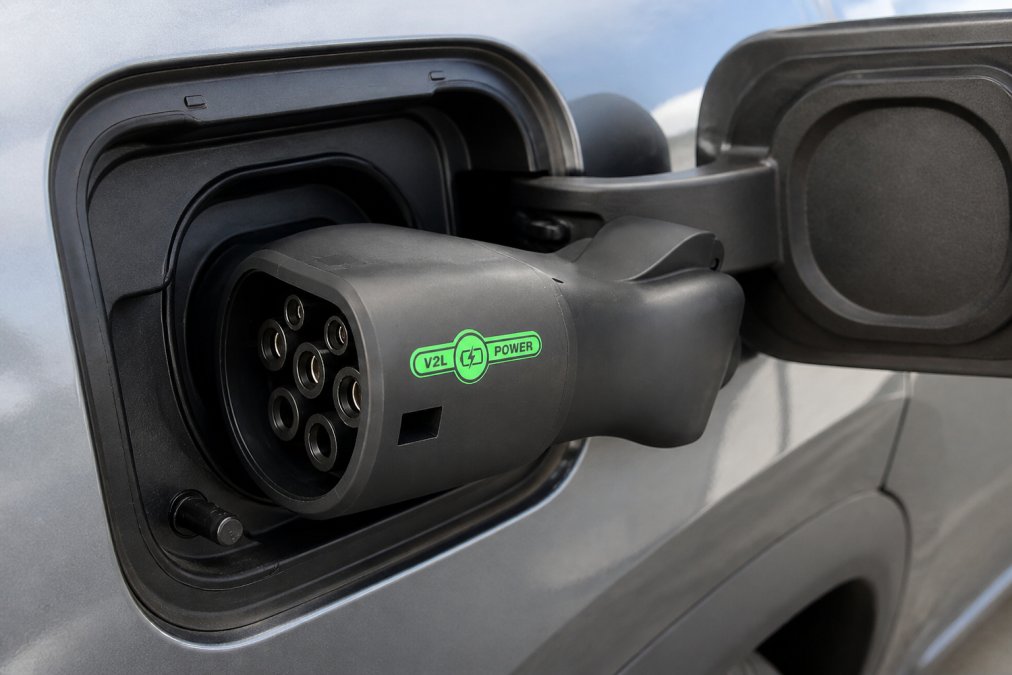
The Type 2 connection is robust, but the quality of the adapter determines whether the communication and power supply are reliable.
External V2L converter: When a simple adapter is not enough
If you need higher power limits, better stability, or more control, an external V2L converter is the answer. Unlike a simple adapter, an external converter is a standalone device with its own electronics.
An external inverter can deliver up to 11 kW, compared to 3.7 kW from a simple adapter. This means you can power multiple appliances simultaneously or appliances with higher power consumption – entire air conditioning units, industrial power tools or backup power for larger parts of your house.
Inverters also offer better voltage stability and protection. They continuously monitor the power supply and adjust as needed. If you use your electric car as backup power at home during power outages, an external inverter is safer than a simple adapter.
External V2L inverters are best for tradesmen, service companies, camping operators, and homeowners who want reliable backup power or want to power high-power appliances.
Practical use: Camping, backup power and business
A V2L adapter opens up three practical uses.
Camping and outdoors: You can power camping equipment – fan, lamps, coffee maker, small electric grill – directly from your car battery. A mid-range adapter covers most needs. You get power without having to carry a separate generator with you. For a weekend camping trip, a fully charged electric car will last for several days, depending on usage.
Backup power at home: During a power outage, you can plug essential electronics—router, lights, refrigerator—into your car. A simple adapter works for smaller appliances, but if you want to power multiple things at once, you'll need to invest in an external inverter.
Commercial use: Craftsmen, electricians and service companies can use V2L to power tools on construction sites without plug connections. An external inverter provides the necessary power and stability for professional power tools.

In all three scenarios, quality is important. A cheap adapter may work the first time, but fail when you need it most. A certified adapter like V2LPower's solutions gives you the assurance that the power is there when you need it.
How do you choose the right V2L adapter for your situation?
Choosing between V2L adapters comes down to three questions: What will you use it for? How often? And how much power will it deliver?
If you camp once or twice a year and need to power small devices, a mid-range adapter is sufficient. The V2LPower adapters meet this need perfectly.
If you want to use your car as backup power at home or power multiple devices simultaneously, you should invest in an external inverter.
If you are a businessman and need to use V2L daily, a professional solution is a business investment. A failed inverter means lost workdays and unhappy customers.
Whatever you choose, you must:
- Confirm that your car supports V2L
- Choose an adapter designed for your specific car model
- Look for safety certification (CE marking)
- Prioritize support and warranty over cheapest price
V2LPower offers free email support throughout Europe, which means that if problems arise, you can get help without having to wait for replacement equipment.
The right V2L adapter is the one that works reliably for your specific car and your specific needs.
Frequently Asked Questions
Q: What is the difference between a V2L adapter and an external V2L converter?
A: A V2L adapter plugs directly into your car's charging port and provides access to power from the vehicle. It is simple and ideal for smaller appliances. An external V2L inverter is a more advanced solution that converts power from the battery with higher efficiency and stability. Inverters are typically used for larger power applications, home backup power, or professional use where reliability is critical.
Q: How do I ensure that a V2L adapter is compatible with my electric car?
A: V2L compatibility of electric cars depends on the car model, year and software. Not all electric cars support the V2L feature. Check your car manual or contact the manufacturer to confirm V2L support. V2LPower offers car-specific adapters and free email support throughout Europe to help you find the right solution for your exact model.
Q: Are cheap V2L adapters dangerous to my car's electrical system?
A: Safety of V2L adapters is crucial. Unoriginal or cheap adapters without proper certification can damage the car's battery, electronics or charging infrastructure. Certified adapters, like V2LPower's solutions, have safety tests, overload protection and handshake protocol to ensure proper communication with the car. Original or certified products protect both your vehicle and your equipment.
Q: Can I use a V2L adapter for backup power during power outages?
A: Yes, V2L technology allows you to use your electric vehicle battery as a backup power source. A simple adapter can power smaller appliances such as lights and electronics. For whole-house backup or high power consumption, an external V2L inverter is recommended, which can deliver more stable and higher power over longer periods. Contact V2LPower for guidance for your specific situation.
Choosing a V2L adapter is not just about price – it’s about safety, reliability and getting the most out of your electric car. A certified solution ensures that you can use your car as a power source without risking failure or damage. V2LPower specializes in just that: adapters designed for specific car brands with free European support and the guarantee that the technology will work when you need it. Read V2LPower’s V2L guide to find the perfect solution for your situation.
This article was written using GrandRanker

 Danish
 English
 Swedish
 German
 Dutch
 Norwegian
 Chinese
 French
 Polish
 Italian
 Greek
 Finnish
 Spanish
 Turkish
 Bulgarian
 Czech
 Portuguese
 Bosnian
 Slovak
 Slovenian
 Romanian
 Hungarian
 Lithuanian
 Latvian
 Estonian
 Serbian
 Ukrainian