
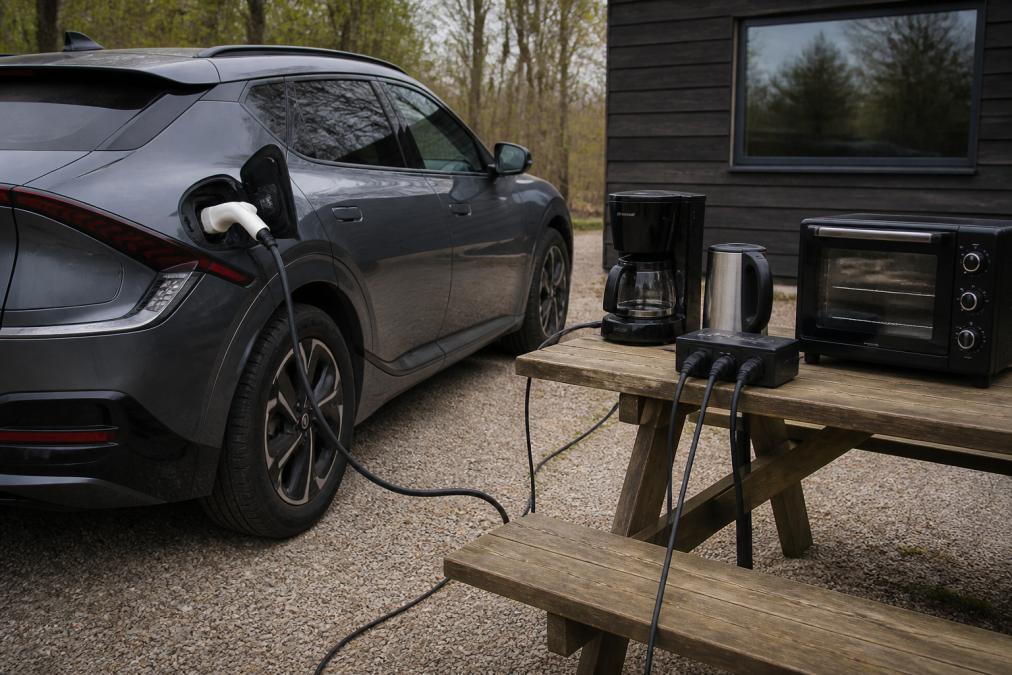
Use electric car as a power source: Complete guide to V2L
Table of contents
- What does it mean to use the electric car as a power source?
- What do you need to get started?
- How to use your electric car as an emergency power supply
- Practical guide: Charging tools from an electric car on the construction site
- What devices can you run with V2L?
- How to protect your car battery during V2L use
- V2L, V2H or V2G: Which solution is right for you?
- Frequently asked questions about using the electric car as a power source
- Frequently Asked Questions
Last updated: September 4, 2026
What does it mean to use the electric car as a power source?
Using your electric car as a power source means that the car's battery supplies 230 V power to external appliances, tools or your home. The technology is called Vehicle-to-Load (V2L), and it turns your electric car into a mobile power source that you can use exactly where you need it.
In short, electric car as a power source a way to utilize the car's large battery capacity when the car is stationary anyway. In this guide from V2LPower, we review everything from adapters and safety to specific use situations such as emergency power and tools on the construction site.
Most modern electric cars have a battery of 60-100 kWh. A typical Danish household battery, on the other hand, only holds 10-15 kWh. Your electric car is therefore a significant reserve of energy that can supply everything from refrigerators and heat pumps to drills and coffee machines.
What do you need to get started?
To use your electric car as a power source, you need two things: a car that supports V2L, and the right adapter or converter. Some car brands have V2L built in from the factory, while others require external equipment.
The key point is that power always flows from the car to your devices. This is not the same as charging the car, where the power goes the other way. V2L is all about drawing energy from the car's battery.
V2L adapter for electric cars: find the right type
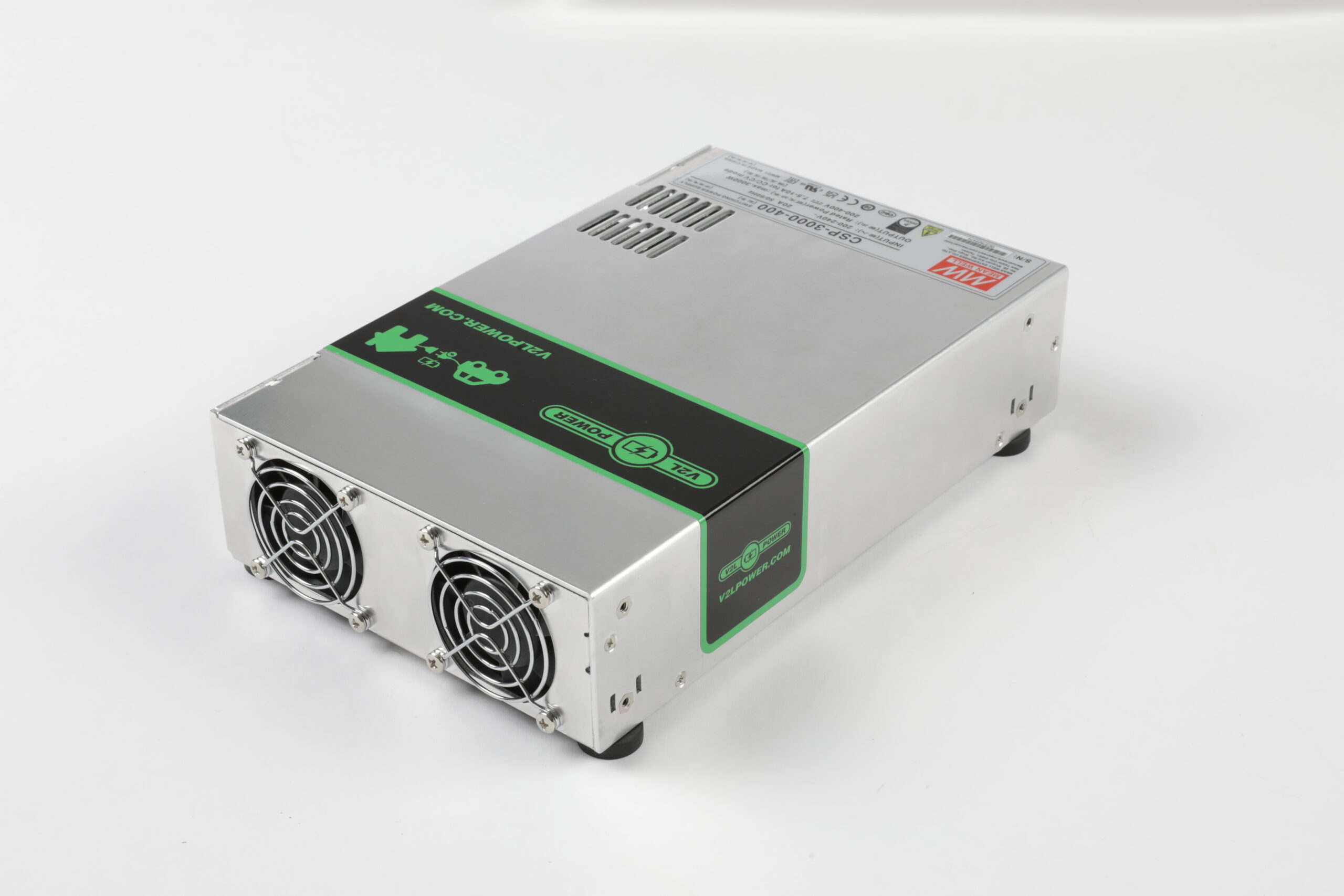
There are two main types of V2L adapters for electric cars. The first is a simple plug adapter that activates the car's factory-installed V2L output via the Type 2 connector. The second is a external converter, which converts the car's DC power to 230 V AC and which works even on cars without factory V2L.
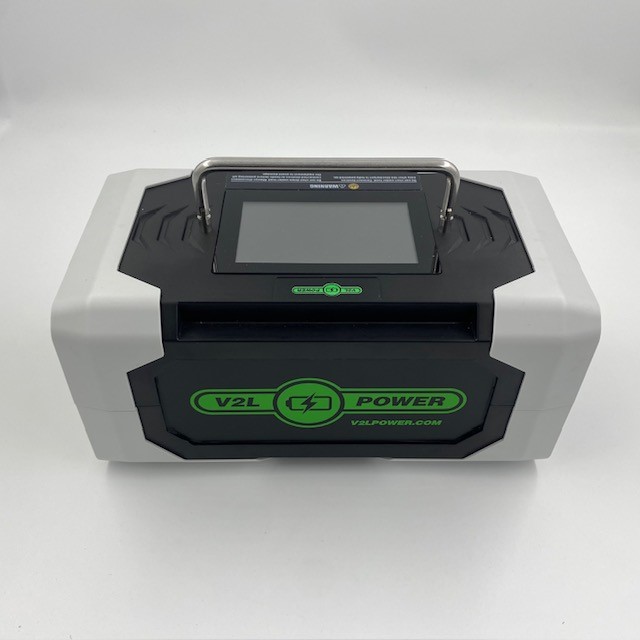
The choice depends on your car model and your needs. If you have a car with factory V2L, an adapter may be enough. If you need more power or are driving a car without built-in V2L, an external converter is the right solution.
Getting started: A handy checklist
While most guides stop at theory, here's the concrete path to a working setup at home:
- Check the car's V2L specification – Find the vehicle's maximum continuous power (typically 2.5-3.6 kW for factory V2L) and confirm whether it uses the Type 2 connector or a separate connector for V2L.
- Choose adapter or converter – For a car with factory V2L, a certified Type 2 V2L adapter is sufficient. For cars without built-in V2L or requiring higher power, an external converter is selected.
- Buy an approved extension cord – Use a grounded cord that is designed for outdoor use and can handle the current. A regular indoor cord is not suitable for wet or cold environments.
- Test the setup before you need it. – Plug in the adapter, start the car, and test with a known appliance like a desk lamp before relying on the emergency power solution.
- Get an electrician for permanent installations – If you are going to use your car to supply the entire house's electrical panel (V2H), a permanent installation with a car-to-house converter is required. This must be installed by an authorized electrician to comply with the Danish High Current Ordinance (BEK no. 1086 of 2018). The electrician must ensure that the installation is properly separated from the grid so that no power is sent back into the grid during an outage.
Never use a regular V2L adapter to power your entire home's electrical installation without a professional car-to-home converter with the correct mains connection. Incorrect connection can damage the car, the home's electronics and pose a serious safety risk. Always contact a licensed electrician to work on the permanent installation.
Which electrician should you use?
In Denmark, work on the fixed electrical installation must be carried out by an installer with authorization according to the Electrical Installers Act. It is not enough to use an electrician without authorization if new groups are to be made or a fixed converter is to be connected. Ask for an installer with experience in renewable energy and bi-directional systems – most major electrical installation companies in Denmark today have employees who are trained for V2H installations.
For a pure V2L solution with adapter and extension cord, there is no legal requirement for an electrician, as you are not changing the house's fixed installation. Instead, it is your own responsibility to use certified and correctly dimensioned equipment.
How to use your electric car as an emergency power supply
Electric car as emergency power supply is one of the most valuable applications of V2L technology. In the event of a power outage, the car can keep critical appliances running for days, depending on the battery's charge level and your power consumption.
How to do it:
- Connect the V2L adapter or converter to the car's Type 2 connector.
- Connect an extension cord from the adapter to the devices you want to power.
- Turn on the car so that the V2L output is activated.
- Prioritize critical appliances: refrigerator, freezer, internet router, and lights.
- Monitor your car's battery level and set a limit on how much you want to use.
However, for an entire household with a heat pump and electric heating, the car battery will not last as long. Here, there are more advanced car-to-home solutions that can supply the entire house's electrical panel.
Never use a regular V2L adapter to power your entire home's electrical system without a professional car-to-home converter with the correct mains connection. Incorrect connection can damage your car, your home's electronics and pose a serious safety risk.
Practical guide: Charging tools from an electric car on the construction site
For craftsmen and service companies, charging tools from electric car a game changer. Instead of lugging around a noisy petrol-powered generator, you can draw quiet and clean power directly from your car.
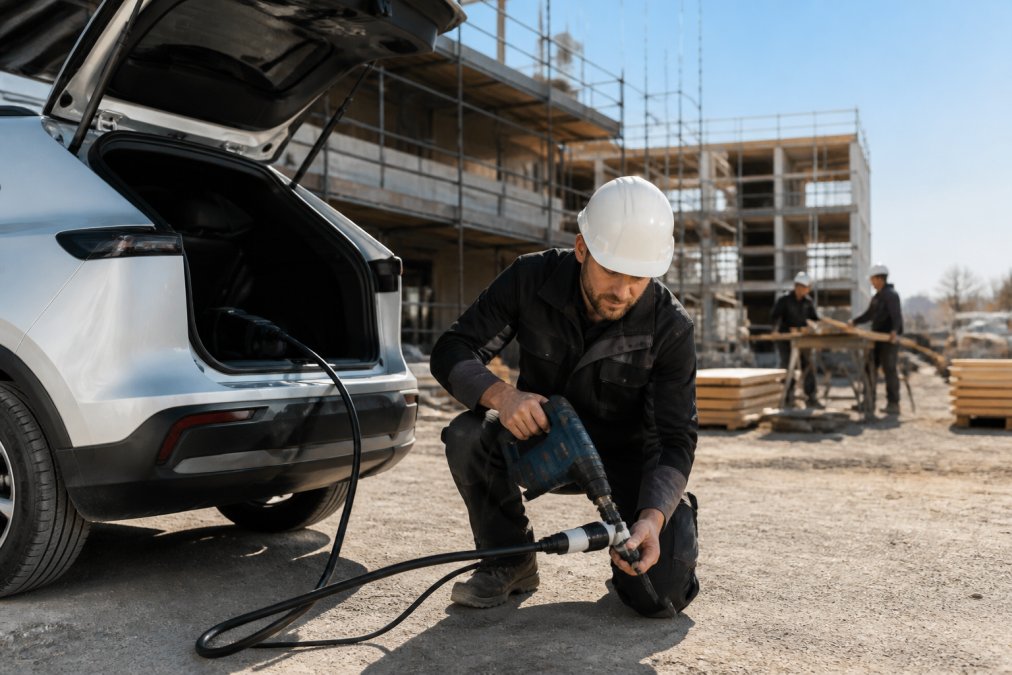
On a construction site without a power outlet, an electric car with V2L can power drills, angle grinders, compressors and charging stations for cordless tools. An external inverter with up to 5kW Continuous power can even run multiple machines simultaneously.
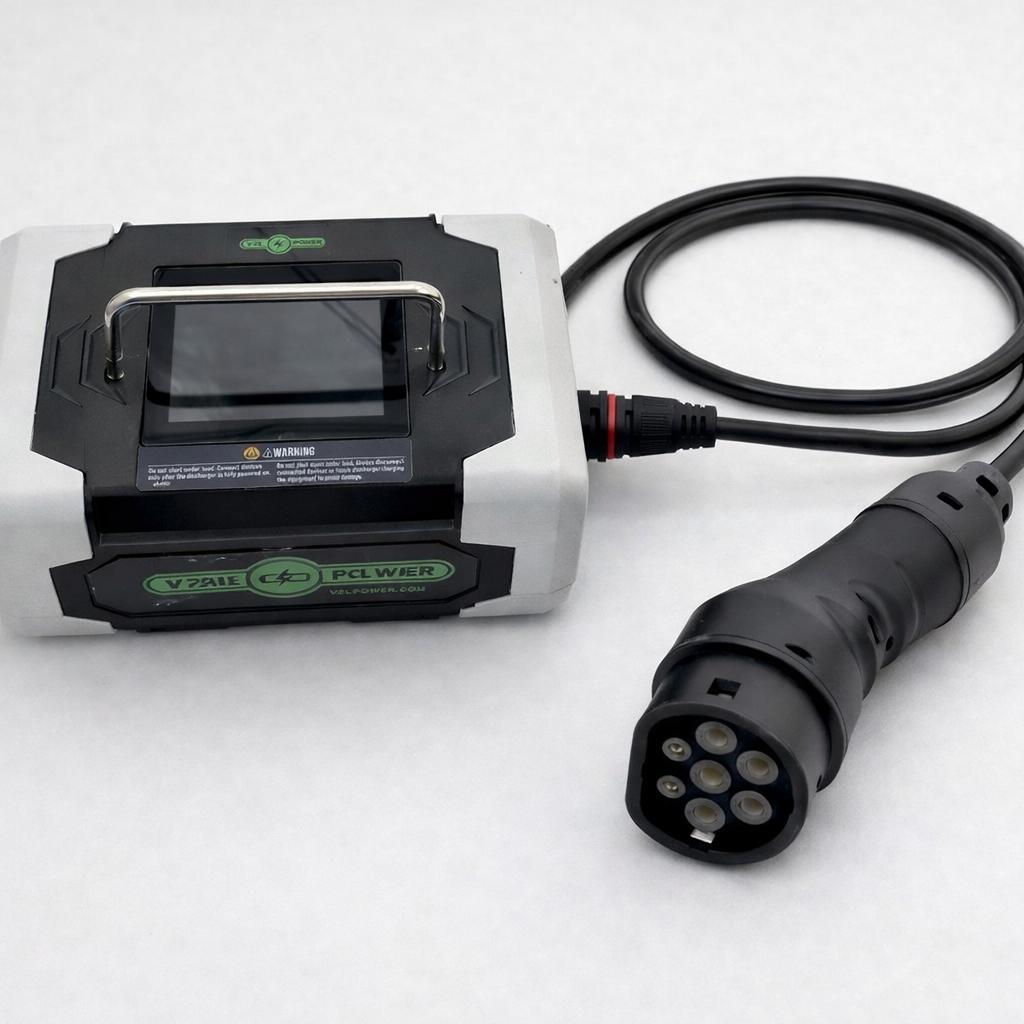
It also means you can charge batteries in the car during the day, so your tools never run out. Many companies find that V2L replaces the generator entirely on jobs where there is no access to power.
| Application | Typical power requirement | What you can drive |
|---|---|---|
| Emergency power at home | 500-2,000W | Refrigerator, freezer, router, lights |
| Construction site and tools | 1,000-5,000W | Drills, angle grinders, compressor |
| Camping and outdoors | 300-1,500W | Hotplate, cool box, electric kettle |
| Car-to-car | 1,000-3,000W | Charging another electric car via Type 2 |
What devices can you run with V2L?
The V2L can power most appliances with a regular 230V socket, as long as you stay below the maximum power of the car or inverter. Here are the most common uses:
- Camping and outdoors: Hotplates, coolers, electric grills and coffee machines.
- Home: Refrigerators, freezers, internet routers, TVs and lighting.
- Tool: Drills, angle grinders, jigsaws and other machines with plugs.
- Charging: Power banks, laptops, phones and other devices via regular sockets.
Always check the wattage of the appliance before plugging it in. A high-wattage appliance, like a 2,000W heater, can drain your car battery faster than you expect. Calculate your usage and set a limit on how much of your car battery you want to use.
How to protect your car battery during V2L use
One concern many have is whether V2L is draining your car's battery. The short version is that V2L use has minimal impact on battery life if you follow a few simple guidelines.
Avoid completely discharging the battery, nor leave the car with a very low charge for extended periods after use. Most manufacturers recommend keeping the battery between 20 and 80 % to maximize its lifespan.
Also, only use certified equipment that has been tested for your car model. Cheap adapters without proper certification can send incorrect signals to the car and, in the worst case, damage the electrical system.
V2L, V2H or V2G: Which solution is right for you?
There are several variations of bi-directional charging, and it can be confusing. Here's the difference in plain language:
- V2L (Vehicle-to-Load): Power from the car to appliances via plug. The simplest solution that requires minimal equipment.
- V2H (Vehicle-to-Home): Power from the car to the entire house's electrical installation. Requires a permanent installation and professional converter.
- V2G (Vehicle-to-Grid): Power from the car back to the electricity grid. The most complex solution, requiring special agreements with the grid company.
For most people, V2L is the right starting point. It covers 90% of the needs: emergency power, camping, tools and mobile purposes. If you need to use the car as a backup for the entire house, a V2H solution with a permanently installed inverter is the way to go.
Regulation and grid connection in Denmark: What you need to know
While V2L is a pure exercise in drawing power from the car, there are important Danish regulations to consider when you take the next step to V2H and V2G.
V2H and your household installation
When you install a fixed V2H inverter, it must be registered as part of your household installation. According to the High Current Ordinance, all work on the fixed installation must be carried out by a licensed electrician. In addition, your installation must comply with the rules for island operation – meaning that the system automatically disconnects from the electricity grid if a fault occurs on the grid. This prevents your car from sending power to the line while a fitter works to restore power in your area.
V2G and the grid companies
V2G is a different matter. Here you need to have an agreement with your local grid company, as you effectively become a small electricity producer that supplies power back to the public grid. In Denmark, it is the grid company (e.g. Cerius, Radius or N1) in your supply area that must approve the connection. The requirements vary, but common is that you need a certified bi-directional charging box and an inverter that meets Danish requirements for grid protection (e.g. DS/EN 50549-1). You also need a meter that can register both consumption and production – most modern remotely read meters can do this, but this must be confirmed with the grid company.
Practical consequences for you
For the vast majority of homeowners, V2G is not a practical solution today. It requires both a bidirectional charging box (which is more expensive than a regular charging box), a car that supports V2G (only a few models on the Danish market today), and an approval process with the grid company, which can take time. V2H is more realistic, but still requires a licensed electrician and an approved converter.
V2L, on the other hand, is the solution you can use today without regulatory approvals – just with the right equipment and an understanding of the limitations of the car and the equipment.
Choose V2L for mobile and emergency needs, V2H for backup of the entire house (with a licensed electrician), and wait with V2G until the grid companies and car manufacturers have standardized the process in Denmark.
V2LPower offers both. Our V2LPower P12 car-to-home package includes everything you need to power your home from your car, while our 5 kW external inverters gives you flexibility on the go.
Frequently asked questions about using the electric car as a power source
Can V2L damage my car?
No, not if you use certified equipment that is compatible with your car model. V2L is designed to draw power safely from the car's battery, and the car's control system regulates the power itself. However, never use cheap adapters without documented safety.
How much power can I draw from the car?
It depends on the car and the equipment. Most cars with factory V2L deliver between 2.5 and 3.6 kW. With a external converter you can get up to 5 kW of continuous power.
How long can the car power my home?
With a 60 kWh battery and a consumption of 1,000 W, the car can theoretically provide power for up to 60 hours. In practice, however, you should take into account that you should not completely drain the battery.
How do I know if my car supports V2L?
Check your car's specifications or contact the manufacturer. Many newer electric cars have V2L built in, but there is a big difference in how the technology is implemented across makes and models.
To use electric car as a power source opens up a wide range of practical possibilities, whether you are camping, on a construction site or without power at home. The biggest challenge is choosing the right equipment that is compatible with your particular car. At V2LPower, we guide you through the entire process with technical guides, video tests and free email support throughout Europe. Get the most out of your electric car with a safe and certified V2L solution that is tested for your model. Read our V2L guide and find the right solution today.
Frequently Asked Questions
Can you use electricity from an electric car for your home?
Yes, you can. With V2L technology, you can draw 230 V AC power directly from your car battery to your house. However, this requires a V2L adapter or an external converter, and you must connect the car via an approved plug and extension cord to your electrical system. The power is typically limited to 2-3 kW, which is enough for lights, a refrigerator and smaller appliances. If you need to supply the entire house with higher power, you should consider a V2H solution with a fixed installation.
What is the difference between V2L, V2H and V2G?
V2L (Vehicle-to-Load) means that you connect appliances directly to the car via an adapter. V2H (Vehicle-to-Home) uses a fixed installation so that the car can supply the entire house during a power outage. V2G (Vehicle-to-Grid) lets you send power from the car's battery back to the grid for a fee. V2L is the simplest and cheapest solution because it only requires a portable adapter. V2H typically requires a professional installation, while V2G is still being deployed in Denmark.
Is using V2L harmful to the car battery?
Moderate V2L use does not significantly strain the battery. Car manufacturers have designed the system to handle the load, and most cars automatically protect the battery from overheating and low charge. However, avoid completely draining the battery, and keep the charge above 20 percent. For longer-term use as a power source, it is recommended to set a limit on how much capacity can be used. Always follow the car manufacturer's recommendations and use certified equipment.
How much power can you draw from an electric car with V2L?
Most electric cars with factory V2L can deliver between 2 and 3.6 kW. Some newer models support up to 6 kW. If your car does not have factory V2L, an external V2L inverter can deliver up to 5 kW of continuous power. This corresponds to about 16 amps at 230 V. With 5 kW, you can run most household appliances, power tools and small heat sources. For appliances with high starting current, such as refrigerators and heat pumps, you need to ensure that the inverter can handle the short-term overload.
This article was written using GrandRanker
 Danish
  English
  Swedish
  German
  Dutch
Dutch  Norwegian
  Chinese
  French
  Polish
  Italian
  Greek
Greek  Finnish
  Spanish
  Turkish
  Bulgarian
  Czech
Czech  Portuguese
  Bosnian
  Slovak
  Slovenian
  Romanian
  Hungarian
  Lithuanian
  Latvian
  Estonian
  Serbian
  Ukrainian