
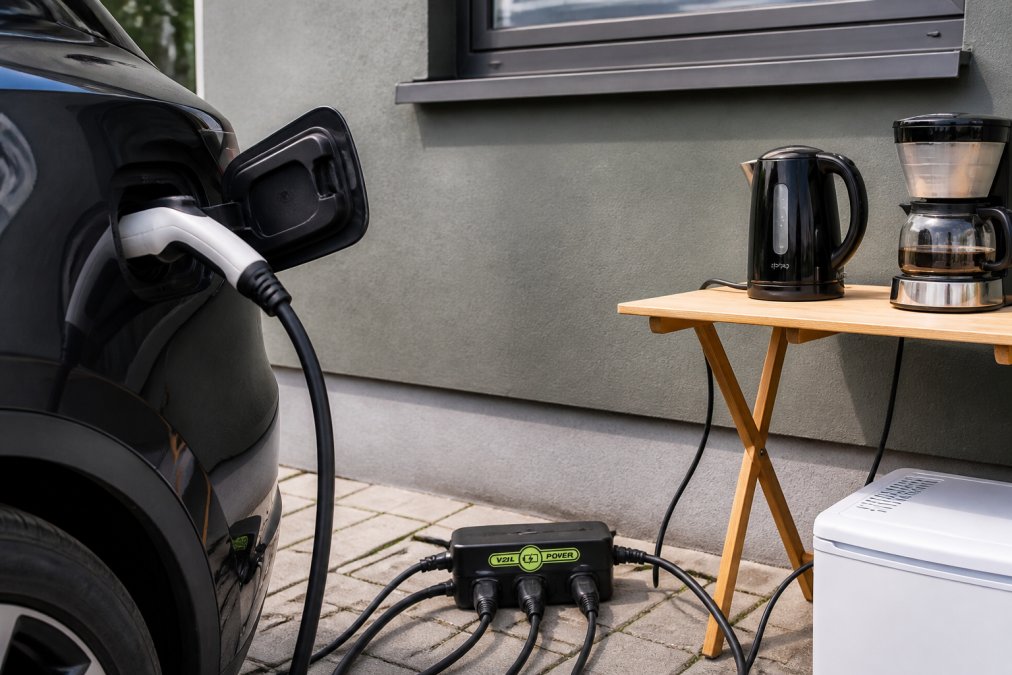
Safe use of V2L adapter: Step-by-step guide
Table of contents
- What is V2L technology and how does it work?
- V2L adapter compatibility: Which cars support V2L
- Safety precautions when using V2L adapter
- Step-by-step guide to connecting V2L adapter
- Power consumption at V2L: Power limitations and device types
- Troubleshooting: What to do when V2L adapter doesn't work
- Conclusion
Last updated: August 15, 2026
What is V2L technology and how does it work?
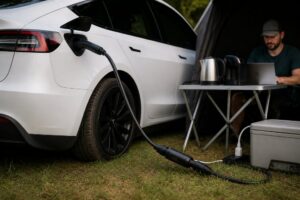
Vehicle-to-Load (V2L) is the technology that allows you to draw electrical power directly from your electric vehicle to power external devices and equipment. Instead of the power flowing into the battery during charging, it flows out of the vehicle through an adapter or converter for everything from camping gear to tools and emergency power supplies.
V2L technology takes advantage of the large battery pack that every modern electric car has built in. When you plug a V2L adapter into your car's charging port, your car acts as a mobile power source. The power is converted from direct current (DC) to alternating current (AC), which is required by most household appliances and tools.
V2L is not the same as charging your car. The power flows outward from your vehicle, not into it. It is crucial to understand this difference for safe use.
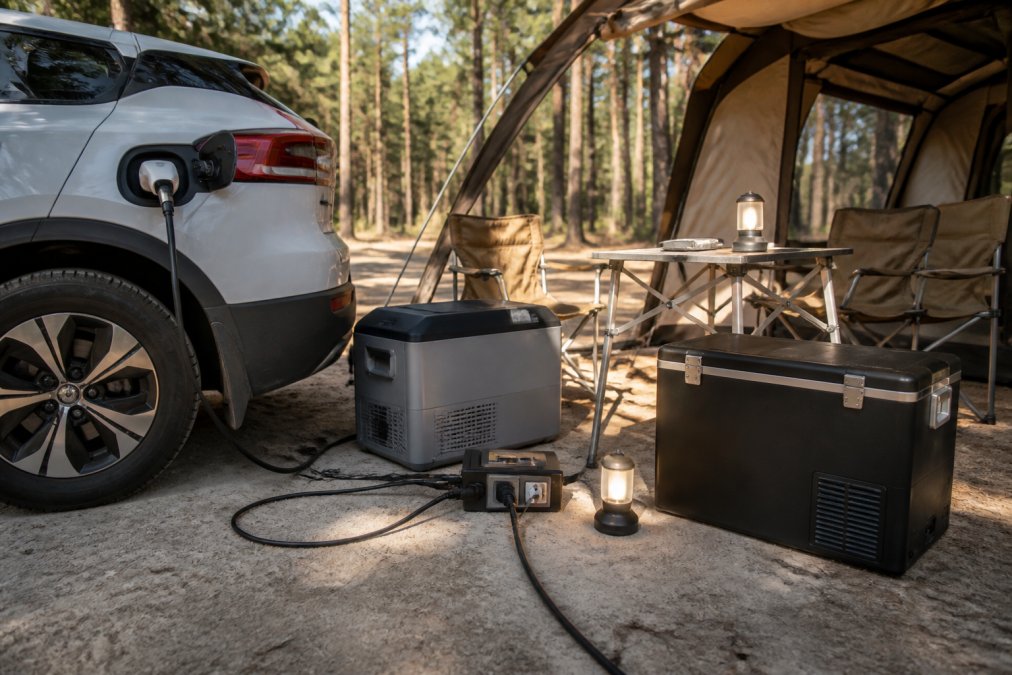
This technology opens up completely new possibilities for electric car owners. You can use your car as a backup power supply at home during power outages, go camping without being dependent on power points, or power professional tools on construction sites. V2LPower specializes in delivering secure and certified solutions for this type of power outlet.
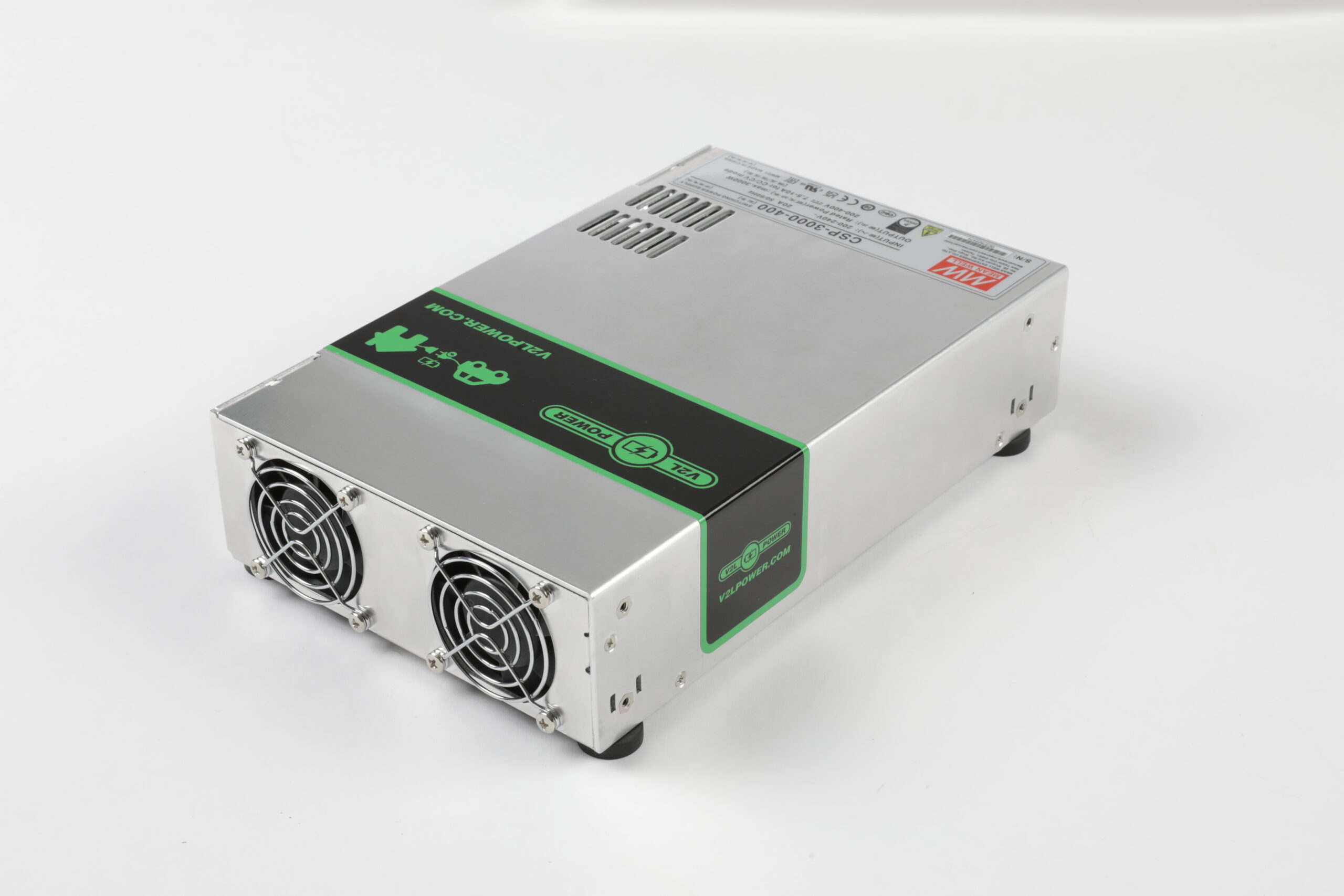
The fundamental difference between V2L and traditional car chargers is the direction of current. With V2L, your electric car is the supplier, not the consumer.
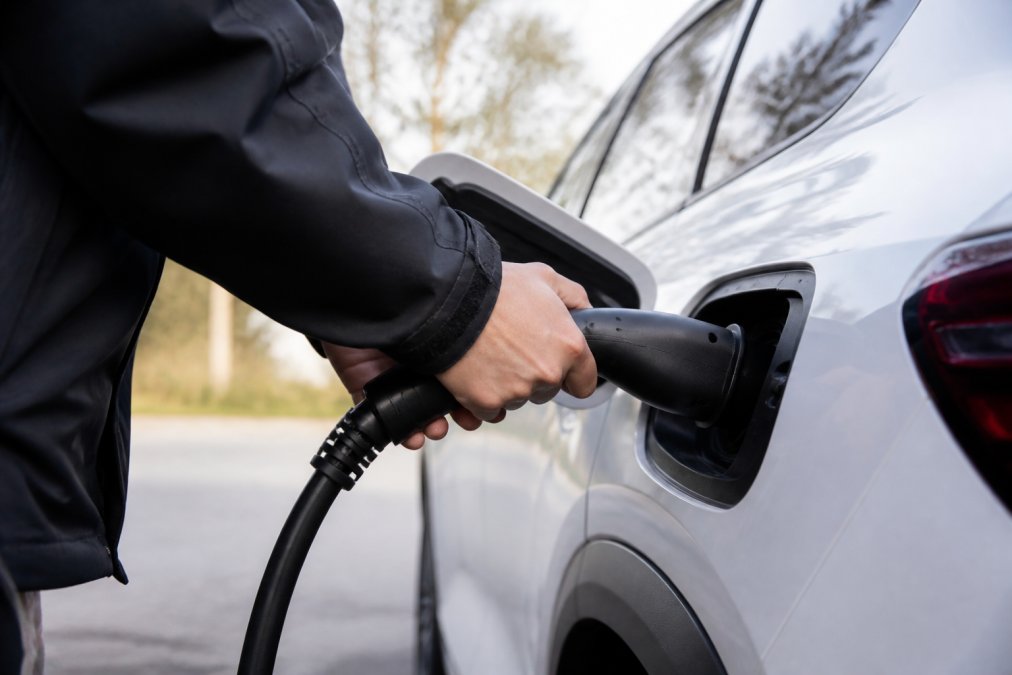
V2L adapter compatibility: Which cars support V2L
Not all electric cars support V2L from the factory. Compatibility depends on the car's manufacturer, model, and year. Some car brands like Hyundai, Kia, and Volkswagen have integrated V2L functionality into their newer models, while others don't yet offer it.
Before purchasing a V2L adapter, it is crucial to check whether your specific electric car model supports the technology. An adapter, that doesn't fit your car is worthless, and worse: it can potentially damage your car's electrical system if connected incorrectly.
How to check compatibility before purchase
Start by checking your car's manual or the manufacturer's official documentation. Look for terms like "V2L," "Vehicle-to-Load," "Powershare" (Hyundai's term), or "Power Outlet." If these features aren't mentioned, your car probably doesn't support V2L natively.
You can also contact your car manufacturer directly or visit their support website. Provide them with your vehicle identification number (VIN) and they can confirm if your model has V2L capability.
Many electric car shops and specialists can also help. V2LPower has detailed compatibility guides for specific car makes and models, this is an important part of their approach to ensuring you get the right solution for your particular car.
Compatibility is not something to be guessed at. Check before purchasing. An incorrect adapter can damage your car's electrical system.
Safety precautions when using V2L adapter
Safety is paramount when using V2L. The electrical energy from an electric vehicle battery is significant, and improper handling can cause serious damage to both equipment and people.
A safe V2L adapter should have several important safety features. Short-circuit protection prevents power from being shorted if wiring becomes damaged. Surge protection protects connected devices from sudden power spikes. Grounding ensures that power can flow safely away from people and equipment.
Certification to international standards (such as CE marking in Europe) means that the adapter has been tested for these safety aspects. V2LPower's solutions carry such certification, giving you the assurance that you are using a reliable and tested solution.
Weather conditions and outdoor safety
When using V2L adapter outdoors, especially when camping or for emergency power, weather conditions are critical. Water and electricity are a dangerous combination.
Never use a V2L adapter during heavy rain or snowfall. Even if the adapter itself is waterproof, water can enter the connectors or cables and cause a short circuit. If you need to use the V2L in wet weather, you must have a waterproof cover or protective box around the connectors.
Direct sunlight can also affect the adapter. If it is left in direct sunlight for a long time, it may become hot. Ensure adequate ventilation around the adapter and avoid covering it with materials that block airflow.
Temperature is also important. Extreme cold or heat can affect the battery's ability to deliver power safely. If it's below freezing or above about 40°C, you should be extra careful with V2L use.
Electrical safety and short circuit protection
Short circuit protection is one of the most important safety features in any V2L adapter. If a wire becomes damaged and the two poles of the power come into contact with each other, a short circuit can occur, causing a fire or explosion.
A good adapter has automatic short circuit protection that cuts off power immediately if a short circuit occurs. This happens much faster than a human reaction could be.
Surge protection is also important. If your electric car suddenly sends a power surge (which can happen under certain fault conditions), the adapter should protect your connected devices from being damaged.
The ground connection ensures that any faults in the power circuit do not allow current to flow through a person who might touch the appliance or cable.
Never use an adapter without proper certification. Cheap, uncertified adapters may lack critical safety features. The risk of fire, explosion, or electric shock is real.
Step-by-step guide to connecting V2L adapter
Connecting a V2L adapter requires care and precision. If you follow the steps carefully, the process is safe and straightforward.
Preparation and check before starting
Before connecting the adapter, you need to make a few important checks.
First: Make sure your electric car is parked in a safe and flat area. Turn off the engine completely. If your car has manual parking, activate it. This ensures that the car does not move during the connection.
Second: Inspect the adapter for physical damage. Look for cracks, broken parts, or signs of previous damage. If you find damage, do not use the adapter; it may be electrically unsafe.
Third: Check that all cables are intact and undamaged. Look for signs of wear, cracks, or exposed wires. Damaged cables should not be used.
Fourth: Make sure the charging port area is dry. If there is any moisture around the port, wipe it off with a clean cloth. Water and electricity don't mix safely.
Fifth: Check that your car's State of Charge (SOC), the battery's charge level, is sufficient. Most cars require at least 20% SOC to provide V2L power. If your battery is almost empty, you should charge it first.
Connecting the adapter and load
Now you are ready to connect the adapter.
Step 1: Open the car's charging port. This is usually done via a button inside the car or via an app. Some cars have a mechanical opening on the port itself.
Step 2: Remove the V2L adapter and inspect the connector again. Make sure it is clean and dry. If there is anything on the connector, it may prevent good contact.
Step 3: Insert the plug into the car charging port. Do this slowly and carefully. You should hear or feel a click when the plug is fully inserted. Do not force it, if it does not fit, something is wrong. Pull it out and check again.
Step 4: Once the adapter is connected, the car's display or an indicator light on the adapter will usually indicate that V2L is active. Some cars will display "V2L Ready" or similar. Wait a few seconds for the system to stabilize.
Step 5: Now connect your first appliance to the adapter. Start with something smaller, not your biggest load. This will allow you to check that everything is working properly.
Step 6: Turn on the appliance. If it turns on normally, the connection is secure. If there are sparks, a burning smell, or other signs of failure, immediately turn off the appliance and unplug the adapter.
Monitoring during operation
Once the V2L system is up and running, you must actively monitor it.
Feel the adapter and cables. They should be warm, but not hot enough to burn you to the touch. If they get very hot, there may be a problem with the power transfer. Turn off the device and let the system cool down.
Listen for unusual noises. A loud whining, buzzing, or cracking sound may indicate an electrical problem. If you hear anything like this, turn off the appliance immediately.
Check your car's display regularly. If your car displays an error code or "V2L Conditions Not Met", it means the system has detected a problem. Read the error code carefully, it will tell you what is wrong.
If you use V2L for an extended period of time, take a break every 30-60 minutes to let the system cool down. This will prevent the adapter and the car's electronics from overheating.
Power consumption at V2L: Power limitations and device types
Maximum current output and State of Charge (SOC)
How much power can your electric car actually deliver through V2L? It depends on several factors.
Most electric cars with V2L support can deliver between 1 and 11 kilowatts (kW), equivalent to approximately 4 to 48 amps at 230 volts. The exact limit depends on the car's hardware and software. Some newer models can deliver up to 11 kW, while others are limited to 3-7 kW.
Your battery's state of charge is crucial. If the SOC drops below approximately 20%, most cars will automatically disable V2L to protect the battery. You cannot draw power from a nearly empty car, that would damage the long-term durability of the battery.
Conversely, if your battery is fully charged (100% SOC), some cars may also limit V2L output to protect the battery during charging. The ideal range for V2L use is typically between 20% and 80% SOC.
Temperature also affects current output. In very cold weather, the car may reduce the maximum current it can deliver to protect the battery. This is a safety mechanism, batteries are less efficient at low temperatures.
Schedule your V2L sessions when the battery is between 20% and 80% SOC. You will get better power output while protecting the long-term battery life.
Which devices can you connect?
With up to 11 kW available, you can run many different appliances. But not all at the same time.
Small appliances (under 1 kW): Lamps, fans, computer chargers, small electronic devices. These can run without problems all day long.
Medium-sized appliances (1-3 kW): Cooling blocks, electric kettles, small dishwashers, hair dryers. You can typically run one or two of these at the same time.
Large appliances (3-7 kW): Electric ovens, stoves, heat pumps, large compressors. These require a lot of power. You can usually only run one at a time.
Very large appliances (over 7 kW): Industrial tools, large air conditioners, powerful pumps. These may be at the limit of what a V2L adapter can handle. Always check the maximum power consumption.
When connecting appliances, be aware of the total load. If you connect a cooler (500W) and a lamp (100W) at the same time, you will use 600W. That is fine. However, if you connect a large stove (5000W) and then try to connect another large appliance, you may exceed the maximum current output of the car and the system will shut down.
Troubleshooting: What to do when V2L adapter doesn't work
If your V2L adapter is not working as expected, there are several possible causes. Most of them can be resolved without going to a repair shop.
Common error codes and solutions
""V2L Conditions Not Met"", This is the most common error code. It means that one or more conditions for V2L are not met. Check:
- Is the car's engine completely turned off? (Some cars require this)
- Is the parking brake activated?
- Is the battery between 20% and 80% SOC?
- Is the car's software up to date?
- Is the weather not too hot or cold?
If all of this is OK and the error persists, there may be a problem with the car's V2L system. Contact your car manufacturer.
""Adapter Not Recognized"", The adapter is not being detected by the car. This may be due to:
- The adapter is not fully inserted into the charging port connector.
- The charging port connector is dirty or oxidized.
- The adapter is damaged.
- The car's software does not recognize the adapter
Solution: Unplug the adapter, wait 10 seconds, and then plug it back in. If that doesn't work, clean the connector with a dry, clean cloth. If the problem persists, the adapter may be defective.
""Overvoltage Detected"", The system has detected a power surge. This can happen if:
- An appliance has a defect that causes a power surge
- There is a poor connection in a cable.
- The adapter has detected an electrical problem.
Solution: Turn off all devices immediately. Disconnect the adapter from the car. Wait 5 minutes. Check all cables for damage. If you find any damage, do not use the system again. If everything seems to be fine, try again.
""Battery Temperature Too High"" or ""Battery Temperature Too Low"", The battery is not within the safe temperature range for V2L.
Solution: If it is too hot, park the car in the shade and wait. If it is too cold, park in the sun or wait for warmer weather. These errors usually resolve themselves when the temperature normalizes.
Load management and surge protection
If you get errors related to "overload" or "overcurrent", it means that the total power consumption from your connected devices exceeds what the system can handle.
Solution: Unplug some appliances. Start with the largest one. If you had three appliances plugged in, unplug the one that uses the most power. Wait a few seconds and check if the error is gone.
A good practice is to connect devices gradually. Start with a small device, then add others. If the system accepts it, you are within limits. If you get an error when connecting the next device, you know that device is too large to run with the first one.
Surge protection is a safety feature. If the system shuts down due to a surge, it is not a sign of a fault, it is the system protecting your equipment. Be happy that the protection is working.
If you consistently get overload errors, even when you only have small appliances connected, there may be a problem with the adapter or your car's V2L system. Contact V2LPower or your car manufacturer.
Frequently Asked Questions
Which electric cars support safe use of V2L adapter?
Not all electric cars have V2L functionality. Newer models from Hyundai, Kia, BMW, and other manufacturers support V2L through their charging port. Before purchasing a V2L adapter, check your car's documentation or contact the manufacturer to confirm that your model has V2L capability. V2LPower helps match adapters to specific car models to ensure proper compatibility.
What are the most important safety precautions when using the V2L adapter?
Safe use of the V2L adapter requires: checking the vehicle's state of charge (SOC) before connecting, using an adapter with certification and short-circuit protection, protecting cables from weather and moisture, and monitoring the power output during operation. Never connect devices with a higher power consumption than the adapter's capacity. Avoid use in extreme weather without proper protection, and ensure that the ground around the connection point is dry.
What do I do if my V2L adapter shows the error message 'V2L conditions not met'?
This error code usually means that the vehicle's conditions for V2L are not met. Check: that the vehicle is parked and the engine is off, that the charging state is between 20% and 80% (some vehicles have different limits), that the charging port locking mechanism is activated, and that the adapter plug is properly inserted into the port. If the error persists, restart the vehicle's electrical system by opening the doors and waiting 30 seconds. Contact V2LPower customer support if the problem persists.
How much power can I draw from my electric car with the V2L adapter?
The power output of the V2L varies by car model and adapter. Most V2L systems deliver between 3.6 kW and 11 kW of AC power. Maximum power depends on the car's inverter, the adapter's specifications, and the car's charging status. High-power consumers such as electric stoves or heaters may require the full capacity of the adapter. V2LPower's inverters are designed to handle camping equipment, tools, and household appliances up to their specified power limit without overloading the car's system.
Using your electric car as a power source through V2L is a powerful option, but it requires respect for safety and understanding the limitations of the system. With the right adapter, proper connection and attention to faults, you can have reliable power wherever you go. V2LPower's certified solutions are designed to give you this safety and reliability, so you can focus on getting the most out of your electric car, at home, on the road or in the great outdoors.
This article was written using GrandRanker


 Danish
  English
  Swedish
  German
  Dutch
Dutch  Norwegian
  Chinese
  French
  Polish
  Italian
  Greek
Greek  Finnish
  Spanish
  Turkish
  Bulgarian
  Czech
Czech  Portuguese
  Bosnian
  Slovak
  Slovenian
  Romanian
  Hungarian
  Lithuanian
  Latvian
  Estonian
  Serbian
  Ukrainian